Home
|
Vs the competition
Thinkific vs. Circle: Which platform is right for you?
Through this page, we’ll break down how Thinkific and Circle compare across courses, community, commerce, mobile, analytics, AI, pricing, and scalability, so you can choose the platform that aligns with your unique growth goals.
Summary
If you’re building a business with learning experiences today, you’re likely weighing two powerful — but very different — platforms: Thinkific and Circle. While they seem pretty similar initially, the difference becomes clear when you look at how each platform approaches growth:
- Circle’s main focus is community — layering on courses, email, and website tools as secondary
- Thinkific integrates courses, community, and commerce into a unified learning journey from the start
The TL;DR:
If community engagement and social interaction are your primary differentiators, Circle may be a strong fit. If structured learning, scalable revenue, and B2B selling are core to your strategy, Thinkific is built to support that from day one.
Key takeaways:
- Thinkific is built for learning-first businesses. If structured courses, certifications, assessments, and measurable outcomes are central to your strategy, Thinkific offers a more complete LMS experience.
- Circle is built for community-first businesses. If discussion, engagement, and social interaction are your primary differentiators — with courses layered in — Circle may be a better fit.
- Thinkific scales better for B2B and enterprise. With group orders, bulk enrollment, invoicing, SSO, sandbox environments, and SOC 2 compliance, Thinkific is better suited for training companies and organizations selling to teams.
Winner by category:
- Best for scalability: Thinkific (group and B2B selling options, more advanced features)
- Best for teaching and learning: Thinkific (advanced assessments, integrated AI features, course creation tools, student reviews, and more)
- Best for budget: Thinkific
- Best for solo marketers: Circle (if you’re a solo marketer primarily monetizing through community memberships)
- Best for community-first setups: Circle (Great for businesses prioritizing community over structured learning, course delivery, or commerce)
Thinkific vs. Circle pricing: Which platform costs less?
Thinkific’s plans start at a lower price point than Circle’s, but their costs overall are pretty similar. The real differences come when you compare what features are included in each plan, at each pricing level, and which features are most important to your business. From a holistic perspective, Thinkific costs less.
Here’s a more detailed breakdown of Thinkific and Circle’s plans and pricing:
| Plans | Thinkific | Circle | Savings |
|---|---|---|---|
| Thinkific Start vs. Circle Business | $82/mo $978 billed annually | $199/mo $2,388 billed annually | 62.8% |
| Thinkific Grow vs. Circle Enterprise | $164/mo $1,968 billed annually | $419/mo $5,028 billed annually | 64.4% |
| Thinkific vs. Circle free trials | 30 day free trial | 14-day free trial | – |
The better value depends on what drives your business.
If your primary goal is to build an engaged, community-led membership experience, Circle delivers strong value at its price point. Its plans are designed around community discussions, events, and member interaction, with clean UX and solid mobile functionality. For individual creators and teams who monetize primarily through access to community, Circle can be a cost-effective choice. However, you do need to consider the add-on costs not included in Circle’s plans, such as transaction fees (2% – 4% depending on your plan), custom domains, website builder for sales and landing pages, and email marketing (an extra cost, starting at $19+ a month).
If your business relies on selling structured courses, increasing order value, or scaling into teams and organizations, Thinkific typically delivers greater long-term value. Built-in commerce tools like upsells, order bumps, abandoned cart recovery, and smart payment retries help maximize revenue. At the enterprise level, group orders, invoicing, and SSO enable B2B selling capabilities that Circle does not natively support.
Top features
Thinkific vs. Circle overview: What’s the main difference?
When comparing Thinkific and Circle’s top features, the biggest difference isn’t the number of features — it’s what those features are specifically built to support.
Circle’s top features focus on community engagement. It offers discussion spaces, live events, member directories, gamification, and a polished mobile app experience. Community is the center of the product, and everything else is layered around it.
Thinkific’s top features focus on a holistic approach to structured learning and revenue growth. It includes a modern course builder, virtual communities, assessments, certificates, integrated checkout, upsells, abandoned cart recovery, payment retries, and tools for selling to teams and organizations.
Here’s a look at all of their top features and how they compare:
| Feature | Thinkific | Circle |
|---|---|---|
| Starting Price | $109 a month after free trial | $89 a month after free trial |
| Free trial | 30-day trial | 14-day free trial |
| Dedicated course player | No, courses live within community spaces and lack a dedicated LMS-style course player | |
| Host live webinars with many attendees (free or paid) | ||
| Host personal or group coaching sessions (free or paid) | ||
| Offer digital downloads (free or paid) | Limited by plan | |
| Expert customer support | Reviews cite that support can be inconsistent | |
| Community spaces | ||
| Certificates | Requires workaround | |
| Advanced commerce tools | No | |
| B2B/team selling | No | |
| Built-in email marketing | Email hub add-on (additional cost) | |
| Automated tax collection | Requires integration with Stripe Tax | |
| App integrations | ||
| AI course outline generator | No | |
| Gifting | No | |
| AI quiz generator | Manual | |
| Branded mobile app | ||
| Easy migration process | ||
| AI Teaching Assistant | No |
Fit summary
If you’re searching for the best platform for building an online community, Circle stands out for its engagement tools and user experience.
If you’re looking for the best platform to create and sell online courses at scale, along with communities and other powerful business tools, Thinkific offers a stronger course structure, commerce optimization, and B2B capabilities.
“Moving our training online, from the point of view of our website clients and our team, has completely transformed the business. We have been able to solve massive problems for the schools, and for ourselves.”
— Ian Richardson, Schudio (500,000+ enrolments, 60+ courses)
Course creation

Course creation comparison: Is Thinkific or Circle better for online courses?
While both Thinkific and Circle allow you to sell access to content, they are designed with very different priorities.
Thinkific is purpose-built for online courses. Courses are the foundation of the platform, with structured modules, assessments, certificates, progress tracking, and integrated monetization tools.
Circle is a community-first platform that includes courses as an add-on. Course content lives inside the community feed and lacks many of the structured learning tools found in dedicated course platforms.
Below, we compare Thinkific and Circle across core course functionality, learner experience, assessments, certificates, and monetization tools.
| Course Creation Capabilities | Thinkific | Circle |
|---|---|---|
| Courses as a core product | Add-on to community features, introduced in 2022 | |
| No design or technical experience required | ||
| Create courses with any content type | ||
| Downloadable content | ||
| Assessments and quizzes | Manual, not built-in | |
| Completion tracking | No structured progress indicators | |
| Live lessons with Zoom | ||
| AI course outline generator | Built into the course builder | No |
| Embed many types of multimedia content | ||
| Scalability for larger learning programs | Not designed for enterprise course delivery | |
| Unlimited course file storage | No, limited by plan |
Fit summary
When it comes to course creation and structured learning, Thinkific and Circle are not direct equivalents.
Choose Thinkific if:
- Courses are your primary product
- You need structured modules and lesson navigation
- You require quizzes, assessments, and certificates
You want built-in commerce tools to maximize course revenue - You plan to scale into team or enterprise training
Choose Circle if:
- Community engagement is your main offering
- Courses are supplementary to discussion and membership
- You don’t require advanced assessments or certification tools
In short, Thinkific is built for learning-first businesses, while Circle is built for community-first businesses. If your goal is to deliver professional online courses with a structured curriculum and scalable monetization, Thinkific provides the most complete course platform.
“We needed something that could grow with us and support diverse learner needs. Thinkific Plus offers a dynamic system that evolves with each learner’s journey.”
— Nic Knorr (100,000+ enrollments and 75+ courses)
Learning experience

Learning experience comparison: Which platform offers better student outcomes?
A strong learning experience directly affects engagement, completion rates, and word-of-mouth growth. When learners can easily follow their progress and stay motivated, they’re more likely to finish courses and build loyalty.
Thinkific is designed with the learner experience in mind. With an all-in-one approach to courses, communities, and the buying experience, your learners can enjoy seamless learning without having to jump around on different platforms.
Since Circle’s focus has historically been on communities, the learning experience within those communities is very positive. However, once learners want to take courses or other structured educational experiences within the platform, it can feel less intuitive.
Here’s a closer look at the learning experience features Thinkific and Circle offer.
| Learning Experience Features | Thinkific | Circle |
|---|---|---|
| Easy course navigation | ||
| Optimized for all devices | ||
| Student progress tracking | Limited | |
| Course completion certificates | No | |
| Student course reviews | No | |
| Student engagement surveys | No | |
| Sell memberships to a learning community | ||
| Live events | ||
| Discussion spaces | ||
| Direct messaging | ||
| Mentions and threaded replies | ||
| Member profiles | ||
| In-app and push notifications to bring your audience back | ||
| Third-party app integrations | None for the student experience |
Fit summary
When comparing the learning experience in Thinkific vs. Circle, the biggest difference comes down to structure vs. social interaction.
Thinkific is built for structured learning. It includes a dedicated course player, clear lesson navigation, progress tracking, assessments, certificates, and structured learning paths. This makes it a stronger choice for academies, training companies, and organizations that need formal, outcome-driven education.
Circle is built for community-first engagement. While it offers courses, they live inside community spaces and function more like organized posts than a full LMS experience. Circle does not include native certificates, advanced assessments, or deep learning analytics. However, it excels in discussion spaces and is known for a great mobile app experience.
“We asked our clients how they enjoyed the training that we had rolled out through Thinkific, and the feedback we received was that they enjoyed the content. Another thing that was valuable to them was adjusting to different learning styles. So we had the visual content and the audible content, and then we could also produce an attachment available for download at the end for reference down the road.”
— Ania Mueller, Manager, Delivery and Client Relationships
Sales and marketing

Sales and marketing features: Which platform helps you grow revenue faster?
While Circle and Thinkific both have sales and marketing tools, the gap between the platforms is more apparent here.
With the TCommerce suite of selling, marketing, and payment tools built in, Thinkific has the advantage over Circle in this category.
Although Circle offers basic payment and checkout tools, they lack more advanced selling and commerce features like abandoned cart recovery, payment retries, gifting, upsells, and other features built into Thinkific that help recover lost revenue opportunities. Additionally, Circle does not offer many B2B selling tools, such as group orders, invoicing, or bulk enrollment tools needed to sell into teams and organizations.
Let’s take a closer look at Thinkific and Circle’s sales and marketing tools.
| Sales features | Thinkific | Circle |
|---|---|---|
| Built in landing pages | ||
| Upsells and order bumps | No | |
| Abandoned cart recovery | No | |
| Smart payment retries | No | |
| Gifting | No | |
| Branded email sends | Limited, can purchase email hub add-on | |
| Optimized checkout | Limited | |
| Bulk enrollment | No | |
| Group orders and invoicing | No |
| Marketing features | Thinkific | Circle |
|---|---|---|
| Search engine optimization | Limited | |
| Email campaigns | Limited | |
| AI-powered landing pages | ||
| Coupon codes and discounts | ||
| Analytics and reporting |
| Design customization features | Thinkific | Circle |
|---|---|---|
| Custom branding | ||
| Flexible lay out and page design | Limited | |
| Custom CSS/HTML | Limited | |
| Templates | Limited |
Fit summary
Both Thinkific and Circle allow you to sell courses and access to communities — but they’re built with different goals in mind.
Circle supports monetization, offering landing pages, coupons, and payment processing. However, it lacks built-in revenue optimization tools like upsells, order bumps, abandoned cart recovery, smart payment retries, gifting, and native B2B selling features — which can limit growth without additional tools.
Thinkific is built for revenue growth. Its integrated TCommerce suite includes upsells, cart recovery, and smart retries (helping increase order value by up to 20% and recover up to 30% of failed payments). With Thinkific Plus, businesses can also sell to teams through group orders, invoicing, and SSO.
“To expand our reach, we extended access to our Academy beyond our existing customers. Strategically, we diversified our marketing channels, encompassing SEO, Paid search, Paid social, organic social and various others. Recognizing the paramount importance of a robust and reliable LMS to facilitate our substantial growth, Thinkific became the clear choice.”
— Srikar Chitturi, Full Stack Marketer (5,400+ students worldwide, 8+ online courses, 20+ countries reached with Thinkific)
Mobile app

Mobile apps compared: Which platform is better for mobile-first learning?
Both Thinkific and Circle support mobile-first learning through dedicated mobile apps.
Circle is widely known for its strong mobile app experience. Its native iOS and Android apps are polished, intuitive, and designed specifically for community interaction, with push notifications and smooth discussion features that members appreciate.
Thinkific, however, brings courses and community together in one seamless mobile experience. Instead of separating structured learning from engagement, Thinkific allows learners to move naturally between lessons, discussions, and content — all within a single, branded environment.
The difference comes down to focus: Circle’s app is optimized for community interaction, while Thinkific’s mobile experience is built for integrated learning and growth.
| Mobile app capabilities | Thinkific | Circle |
|---|---|---|
| Price | Thinkific Mobile is included in Start plans and above $199/month for the Branded Mobile app | Free mobile app for community members included with Circle plans; branded mobile app available as part of Circle Plus (extra cost) |
| Available on iOS | ||
| Available on Android | ||
| Support for communities | ||
| White-labeled app | ||
| In-app purchases | Branded app can include in-app purchases via Plus; standard app does not natively include app store purchases by default |
Fit summary
Thinkific’s mobile offering is strong for blended learning and community access on mobile, with the option to publish a fully branded app that supports in-app purchases.
Circle’s mobile app excels for community engagement and discussion on the go, with branded mobile apps available through its higher-tier Circle Plus plan.
If mobile community engagement is your priority, Circle’s app delivers a seamless experience. If you want a branded mobile presence with course and community access, and in-app purchase options, Thinkific’s mobile solutions are more comprehensive.
“About 45% of our users visit horse IQ [our course] through their mobile devices, and it was really easy to set up the Thinkific-branded mobile app.”
— Elizabeth Lawhorn, Director of Competition Development (486% revenue growth since joining Thinkific, 1000+ students across more than 59 countries)
Support
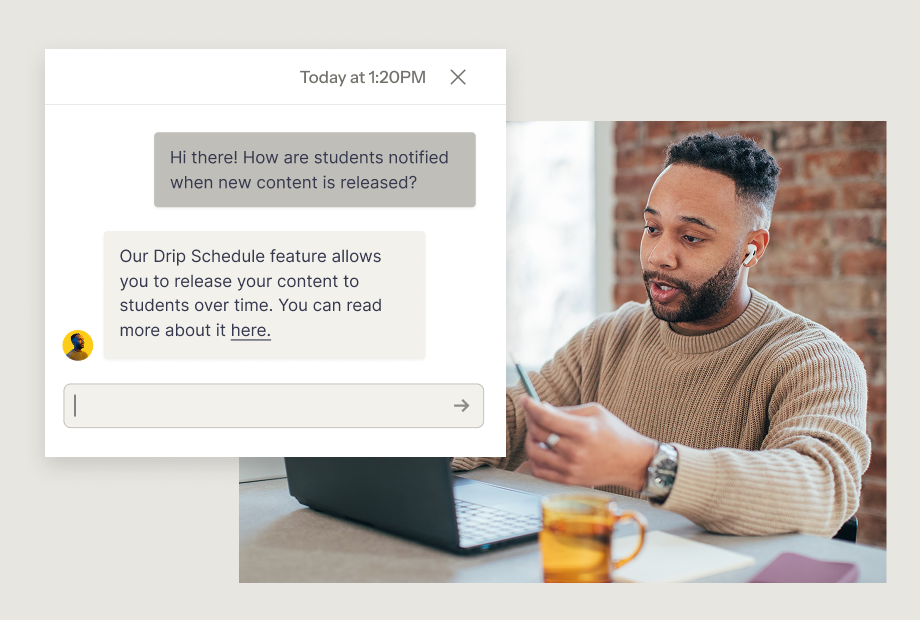
How do Thinkific and Circle support you as your business grows?
Choosing a course platform requires reliable support and strong data security, especially as your business grows. Both Thinkific and Circle provide access to experienced professionals, active user communities, and responsive support teams.
As you grow, and your learning platform becomes mission-critical, Thinkific offers more security and support options, including a G2 award-winning support team, to ensure your success. Since it offers more support options, Thinkific is better suited for growing academies, training institutions, and larger learning businesses.
Unfortunately, Circle isn’t widely known for its support or reliability. Multiple reviewers mention buggy experiences and inconsistent support quality.
Let’s take a closer look at what both platforms offer in terms of support.
| Support features | Thinkific | Circle |
|---|---|---|
| Multiple support options | ||
| Private instructor community | ||
| Access to experts | Limited | |
| Dedicated customer support team | Available, but support quality varies |
Fit summary
Both Thinkific and Circle provide multiple ways to get help — including documentation, guides, and email-based support — but there are meaningful differences in depth and access.
Thinkific’s support ecosystem includes an active Thinkific Community, robust help resources, live webinars, and tiered customer support with priority and onboarding assistance on higher plans. Thinkific also offers structured access to experts through workshops and office hours, especially for Plus customers.
Circle also offers a private community and help resources, and many users benefit from peer support and shared best practices. However, access to dedicated experts and structured onboarding is more limited compared to Thinkific, and support experiences can vary across plans.
“When Epoch Education (119,000+ enrollments, 50+ courses with Thinkific) was planning a course that would welcome over 3500 participants at once, they turned to Pia, from Thinkific’s customer success team, to answer all their technical questions and even had her on standby for the launch, just in case.”
Security
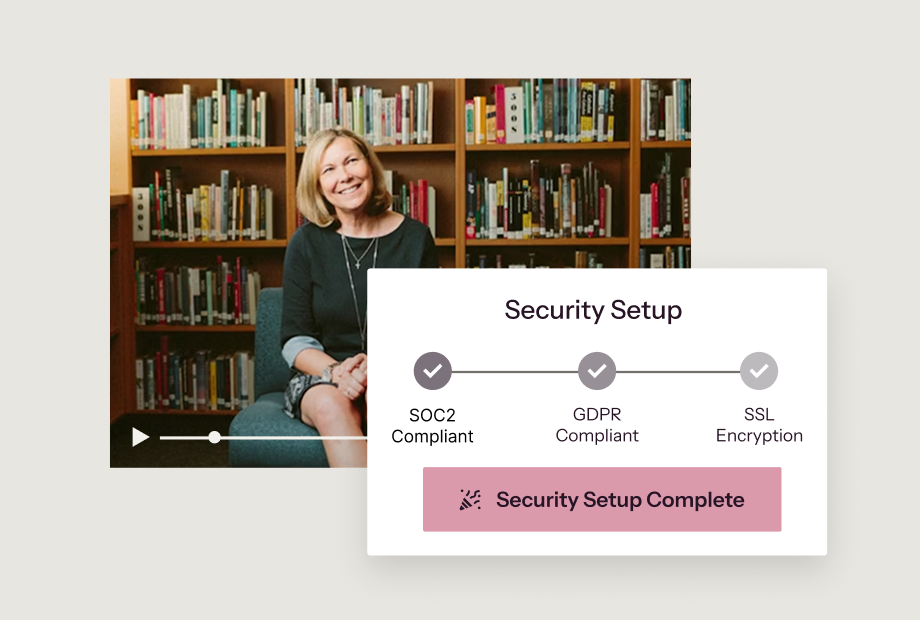
Is Thinkific or Circle more secure?
When you’re hosting paid courses, member data, and customer payments, security isn’t optional — it’s foundational.
Both Thinkific and Circle provide secure cloud infrastructure, encryption, and privacy compliance to protect your content and users. However, there are important differences in enterprise readiness, compliance certifications, and operational controls that may matter as your business scales — especially if you’re selling to teams or organizations.
Here’s how the two platforms compare across key security and compliance standards.
| Security features | Thinkific | Circle |
|---|---|---|
| 99.9% uptime and 24/7 monitoring | Yes, but the uptime SLA is not publicly guaranteed | |
| Secure cloud hosting and daily backups | ||
| Dedicated sandbox site | Not natively available | |
| SOC2 compliant | No public SOC 2 Type II certification found | |
| GDPR/CCPA compliant | ||
| SSL encryption |
Fit summary
Thinkific provides a more comprehensive enterprise-ready security framework, especially for compliance-focused organizations and businesses selling into teams.
Circle provides strong baseline security and compliance appropriate for most businesses or individuals building community-centric offerings.
Both platforms offer solid protections, but Thinkific’s advanced compliance and staging features give it an edge for organizations with higher security and operational needs.
Site administration
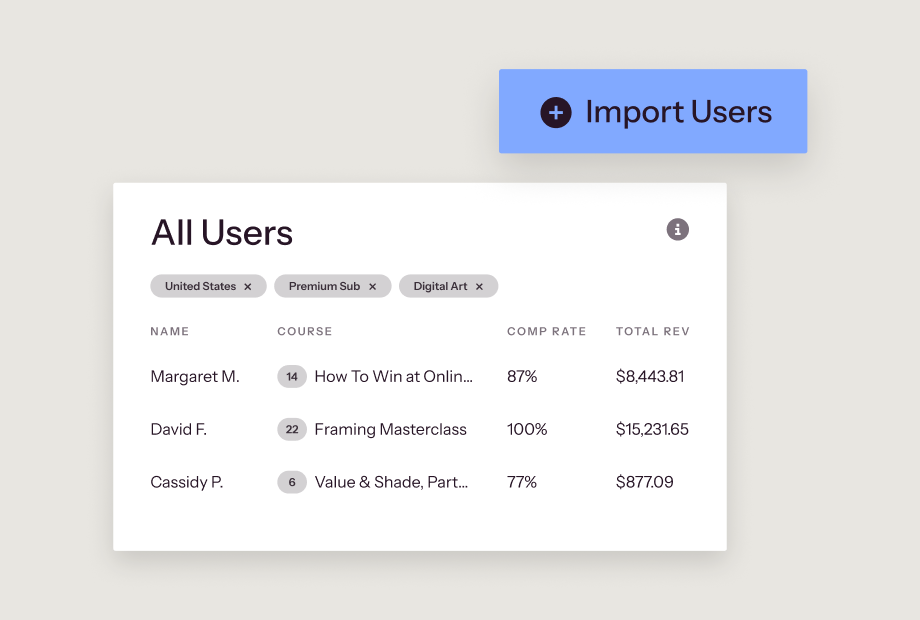
Site administration: Which platform offers better learner management and analytics?
Running a successful learning business or community means more than publishing content: it means managing learners, tracking performance, and keeping everything running smoothly.
Overall, Thinkific offers more advanced site administration tools designed for scaling learning businesses. Features like learner segmentation, group management, detailed progress reporting, and admin controls make it easier to manage large or diverse student audiences while maintaining visibility and control.
Below, we compare Thinkific and Circle on key site administration capabilities that matter for scaling operations.
| Site administration features | Thinkific | Circle |
|---|---|---|
| Single sign-on (SSO) | ||
| Multi-factor authentication | Limited | |
| Archive courses and bundles | Limited | |
| Student progress reports | Limited | |
| Bulk enrollment | No | |
| Analytics | Advanced analytics and reporting | Community analytics focus |
Fit summary
Both Thinkific and Circle allow you to manage users and monitor activity. However, Thinkific provides more advanced administrative tools, particularly for organizations running courses, cohorts, or B2B training programs.
Thinkific offers more advanced administrative features for structured learning businesses. It includes enterprise-grade Single Sign-On (SSO), multi-factor authentication (MFA), course and bundle archiving, detailed student progress reporting, bulk enrollment for teams (on Plus plans), and robust analytics covering learner behavior, revenue, and engagement trends. These tools make Thinkific a strong choice for training companies, cohort-based programs, and organizations that need data-driven oversight and scalable learner management.
Circle’s administrative tools are designed primarily for community management. While it provides member management, engagement analytics, and core security controls, it does not include LMS-style progress reporting, formal course archiving workflows, or native bulk enrollment for team-based selling.
In short, if you’re looking for structured learning administration and advanced reporting, Thinkific provides a more comprehensive solution. If your focus is community engagement rather than formal learning operations, Circle’s administrative capabilities may be sufficient.
“Getting instant access to the data that’s meaningful to us is a huge benefit of working with Thinkific.”
— Philip Michieli
Migration and onboarding
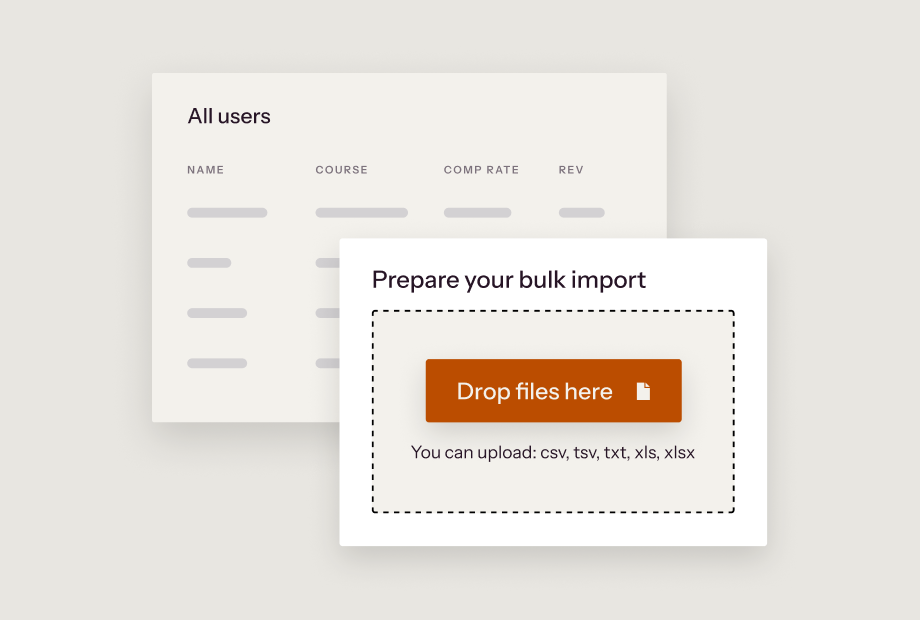
How do Thinkific and Circle handle migration and onboarding?
Moving your courses, content, and members to a new platform can vary widely depending on what you’re migrating.
Thinkific provides a flexible, self-serve migration experience supported by bulk tools and optional onboarding. You can upload course content, import learners, and organize your products in one place without needing developers. For larger or more complex migrations, Thinkific Plus includes guided onboarding with a dedicated specialist to help plan and execute your transition efficiently.
Circle takes a different approach. It offers a done-for-you migration service where its team handles the transfer of course content, including lessons, structure, and media files. This can reduce manual work for users, but the migration scope is more limited — primarily focused on structured course content and not full learning environments or advanced configurations. For example, Circle does not currently migrate all content types (such as custom code or certain community elements), and additional migration needs may require third-party partners.
Here’s a closer look at Thinkific and Circle’s migration offerings.
| Migration tools and support | Thinkific | Circle |
|---|---|---|
| Bulk content upload | Limited | |
| API and customization options | Limited | |
| Learner data and progress transfer | Limited | |
| 1:1 onboarding and launch support | Limited | |
| Bulk enrollments | Limited (manual or plugin-dependent) | |
| Self-serve migration tools | No |
Fit summary
Choose Thinkific if you’re migrating a full learning business — including courses, users, and revenue streams — and need flexibility, control, and scalability. Thinkific is more flexible for complex migrations involving courses, learners, communities, and multiple products. With bulk tools, APIs, and onboarding support, it gives businesses more control over how their migration is structured, making it a better fit for scaling organizations or multi-product learning businesses.
Choose Circle if you want a done-for-you migration of course content into a community-first platform and don’t require advanced learning structure, analytics, learner progress, or complex data transfer.
Frequently asked questions
What is the main difference between Thinkific and Circle?
The main difference is focus: Thinkific is built for structured learning and revenue growth, while Circle is built for community engagement with courses added on. Thinkific combines courses, communities, and commerce into one learning journey. Circle puts discussions, live events, and social interaction at the center, with course content living inside community spaces.
When should I choose Thinkific instead of Circle?
You should choose Thinkific when courses are a core product and you care about structured learning and measurable outcomes. It’s a strong fit if you need assessments, certificates, clear progress tracking, and tools to sell to teams or organizations. It also offers built-in commerce tools like upsells, order bumps, and cart recovery to help you grow revenue from learning products.
When is Circle a better fit than Thinkific?
Circle is a better fit if your business is community-first and your main value comes from discussion, engagement, and membership. It works well when courses are secondary to an active community and you don’t need advanced assessments, certificates, or deep learning analytics. It’s also appealing for solo marketers or small teams who primarily monetize community access.
Which platform is better for creating and delivering online courses?
Thinkific is better for creating and delivering online courses because it’s designed around courses from the ground up. It supports structured modules, progress tracking, assessments, certificates, and an AI course outline generator. Circle treats courses as an add-on inside community spaces, without a dedicated course player or the same level of structured learning tools.
How do Thinkific and Circle compare for learner experience and outcomes?
Thinkific focuses on structured learning paths, with clear navigation, progress tracking, certificates, reviews, and surveys to support better outcomes. Learners move smoothly between buying, taking courses, and engaging in communities in one place. Circle offers a strong community experience with discussions and live events, but its course experience is less structured and more like organized posts inside the community.
Which platform offers stronger sales and marketing tools for online learning?
Thinkific offers stronger sales and marketing tools for online learning because of its integrated TCommerce suite. It includes optimized checkout, upsells, order bumps, abandoned cart recovery, smart payment retries, gifting, coupons, and B2B options like group orders and invoicing. Circle supports payments, landing pages, and discounts but doesn’t include many of these revenue-optimization and team selling features natively.
How do Thinkific and Circle compare on pricing and overall value?
Thinkific starts at a lower price point than Circle and typically offers more value for learning-first or B2B-focused businesses. Its plans bundle in course tools, commerce features, and learning analytics without many add-ons. Circle’s pricing centers on community features, but you may pay extra for things like transaction fees, custom domains, website builders, and email tooling, which can affect total cost depending on your needs.
Which platform is better for B2B or enterprise training programs?
Thinkific is better suited for B2B and enterprise training programs. It supports group orders, bulk enrollment, invoicing, single sign-on, sandbox environments, and advanced reporting, which are important when selling to teams and organizations. Circle focuses more on community management and doesn’t offer the same depth of native tools for team-based selling or enterprise-style course delivery.
How do Thinkific and Circle compare for mobile learning and community access?
Both platforms offer mobile apps, but their strengths differ. Circle is known for an excellent mobile community experience with smooth discussions and notifications. Thinkific brings courses and communities together in its mobile experience and offers a branded mobile app option with in-app purchases. If you care most about integrated course and community access on mobile, Thinkific is more comprehensive; if pure community interaction is key, Circle’s app is very strong.
Which platform provides better support, security, and administration for a growing learning business?
Thinkific provides more robust support, security, and admin tools for a growing learning business. It offers multiple support options, structured onboarding on higher plans, SOC 2 compliance, sandbox sites, and detailed analytics and progress reports. Its admin features include SSO, multi-factor authentication, bulk enrollment, and course archiving. Circle offers baseline security, a community, and help resources, but reviewers report more variable support quality and fewer enterprise-style administration features.
Our customers have earned $4.23 billion with Thinkific
Talk to one of our team members to discover how Thinkific’s award-winning platform can help you drive revenue and retention.