Home
|
Vs the competition
Thinkific vs. Skilljar: Which platform is right for you?
Thinkific and Skilljar are LMS platforms that offer extensive enterprise-grade features. Deciding which solution is the best fit for your business comes down to what they’re optimized for.
Summary
To help you decide between Thinkific and Skilljar, this comprehensive guide will compare their top features for course creation, learning experience, sales and marketing, customization, support and security, and site administration.
Key takeaways:
- Thinkific is built to support a broad range of training use cases including customer, partner, and employee education, as well as revenue-generating learning programs — while Skilljar is optimized primarily for customer onboarding.
- Thinkific offers a more predictable and cost-effective path to scale, without per-learner pricing constraints. Skilljar’s pricing is typically tied to estimated user volumes, add-ons, and ongoing support needs.
- Thinkific stands out for faster time to value and greater flexibility, with built-in commerce, engagement, and administrative controls. Skilljar’s primary strength lies in its extensive CRM integrations.
Winner by category:
- Best for scalability: Thinkific (unlimited courses and students, no per-active-learner pricing model)
- Best for speed to launch and ease of use: Thinkific (G2 reviewers consistently highlight faster time to value and a more intuitive platform, with an average implementation time of ~2 months vs. 2–4 months for most mid-market organizations on Skilljar
- Best for revenue-generating organizations: Thinkific (built-in ecommerce, subscriptions, order bumps, flexible pricing, AI-powered sales funnels)
- Best for CRM integrations for customer onboarding: Skilljar
- Best for supporting multiple use cases: Thinkific (more versatile for organizations treating learning as a product, including customer, partner, employee, and revenue-generating education)
At a glance: Thinkific vs Skilljar
Here’s a quick overview of how Thinkific and Skilljar compare across the criteria that matter most when evaluating learning platforms.
| Feature | Thinkific | Skilljar |
|---|---|---|
| Best for | Fast-growing companies and enterprises focused on delivering customer education, partner training, employee learning, and revenue-generation | Customer onboarding and enterprise customer education |
| Pricing model | Scalable with no per-active learner fees, $0 setup | Tiered pricing based on active users and add-ons, plus setup costs |
| Implementation time | ~2 months — most customers launch within 30 days | 2–4 months (mid-market) and 4–8 months (enterprise) |
| Ease of use | High | Moderate |
| Course authoring | ||
| Enterprise readiness (SSO, SOC 2, SCORM, xAPI) | ||
| Salesforce integration | ||
| HubSpot integration | ||
| Private instructor community | ||
| SSO | ||
| White-label branding | No | |
| AI tools | Course creation, marketing automation, AI teaching assistant | Course creation, AI teaching assistant (beta) |
| Built-in ecommerce / monetization | Limited | |
| Branded mobile app | No | |
| Multi-tenant architecture | Limit of 1000 (capped by plan) | |
| Gainsight ecosystem | – |
Top features
What are the top features of Thinkific and Skilljar?
The platform you choose shapes what your training programs can do and who they can reach. For organizations building customer, partner, or employee education at scale, the right choice comes down to scalability, AI capabilities, CRM connectivity, and built-in commerce tools.
This comparison breaks down where Thinkific and Skilljar differ across the features, so your team can determine which platform is the stronger fit for your organization’s goals.
| Feature | Thinkific | Skilljar |
|---|---|---|
| Unlimited courses, students, and more | — | |
| Unlimited Member-only Communities and spaces | — | |
| Native ecommerce features (order bumps, payment plans, free trials) | — | |
| AI-powered course creation tools (course outlines, quizzes, and more) | ||
| AI-driven marketing and sales capabilities | — | |
| AI-powered teaching assistant | (in beta) | |
| CRM and customer success integrations (HubSpot, Salesforce, Zapier, APIs) | ||
| Built-in sales and marketing tools | Limited |
Fit summary
Thinkific is a strong fit for organizations that treat education as a product — whether that means running customer, partner, or employee programs, monetizing courses, or building learner communities alongside structured training. It’s designed for teams that want AI tools built in across course creation, sales, marketing, and learner support, without relying on external systems to fill the gaps.
Skilljar is better suited to enterprise customer success teams where learning is embedded in an existing CRM workflow. If your primary use case is customer onboarding and your sales and marketing are managed outside the learning platform, Skilljar’s CRM integrations, AI-assisted course creation, and AI learner support may meet your needs.
“Using Thinkific has allowed us to employ our customer education at scale. To date, we have educated over 3,000 users in our products and services. Without Thinkific, it would have taken an immense amount of resources to train our user base.”
— Grace Tilmont, Director of Education Services, Flashpoint.io
Course creation
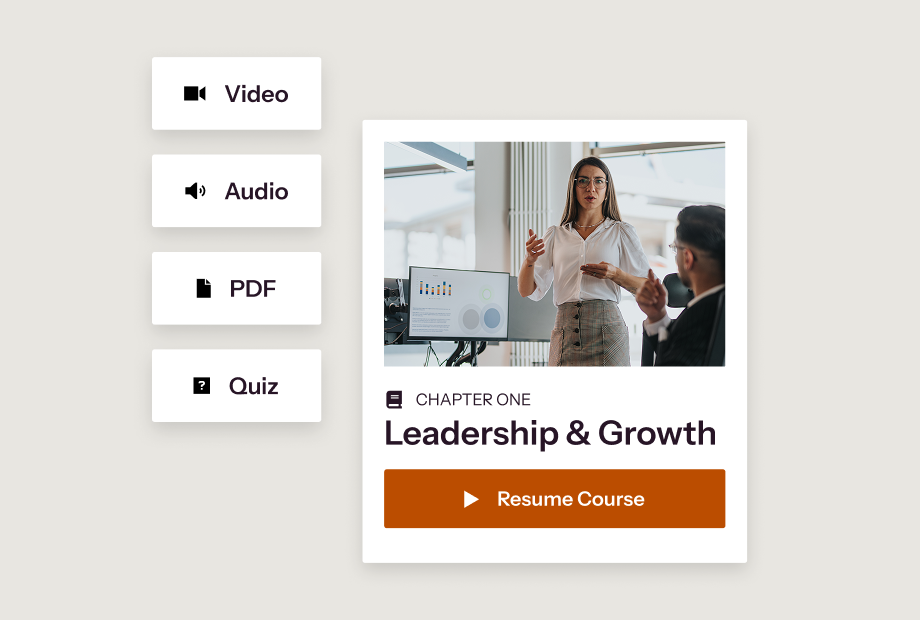
How do Thinkific and Skilljar compare for building courses?
A successful education program starts with a smooth course creation experience. The right tools determine how quickly and easily teams can launch, update, and scale course content.
The biggest differences between Thinkific and Skilljar are flexibility, setup time, and the effort required to manage content over time. Thinkific’s course builder is designed for teams at high-growth businesses and enterprises that need an intuitive, well-supported way to create and launch engaging, multi-format courses — no technical expertise required.
Skilljar’s course creation tools are geared toward customer onboarding and enablement. Its AI-assisted features help admins generate learning objectives, quizzes, and short descriptions to speed up initial setup, but launch timelines still typically lag Thinkific’s average by about a month.
This section compares how each platform supports building, updating, and managing courses at scale.
| Course Creation Capabilities | Thinkific | Skilljar |
|---|---|---|
| Design and technical experience required | Low | Moderate |
| Intuitive course builder | ||
| Unlimited courses, students, and more | — | |
| Create courses with multiple lesson types (video, multimedia, text) | ||
| Downloadable resources, quizzes, and assignments | ||
| SCORM compliant | ||
| Advanced design and branding tools | — | |
| AI generated course outlines, quizzes, and more | ||
| Flexible learning paths | — | |
| Speed to launch | ~2 months | ~2-4 months |
Fit summary
Thinkific is a strong fit for teams that need to launch and scale their learning experiences quickly — without deep design or technical expertise thanks to its highly intuitive course builder.
For fast-growing businesses where time to value matters, Thinkific supports an average launch timeline of around 8 weeks, helping teams get programs live and delivering impact sooner. In contrast, Skilljar typically requires 2–4 months for mid-market organizations — and 4–8 months for enterprise programs with complex integrations — which can slow momentum for organizations operating on tighter timelines.
Skilljar may be a fit for larger enterprise teams delivering customer onboarding or external education programs where launch timelines are more flexible and learning is closely tied to customer success workflows rather than speed or scalability.
“We hit go, we purchased Thinkific, and from there, we spent two weeks ramping our content. We had an incredibly successful rollout. We were utilizing Thinkific within four weeks.”
— Jenn Hunter, Co-Founder at PayShepherd
Learning experience
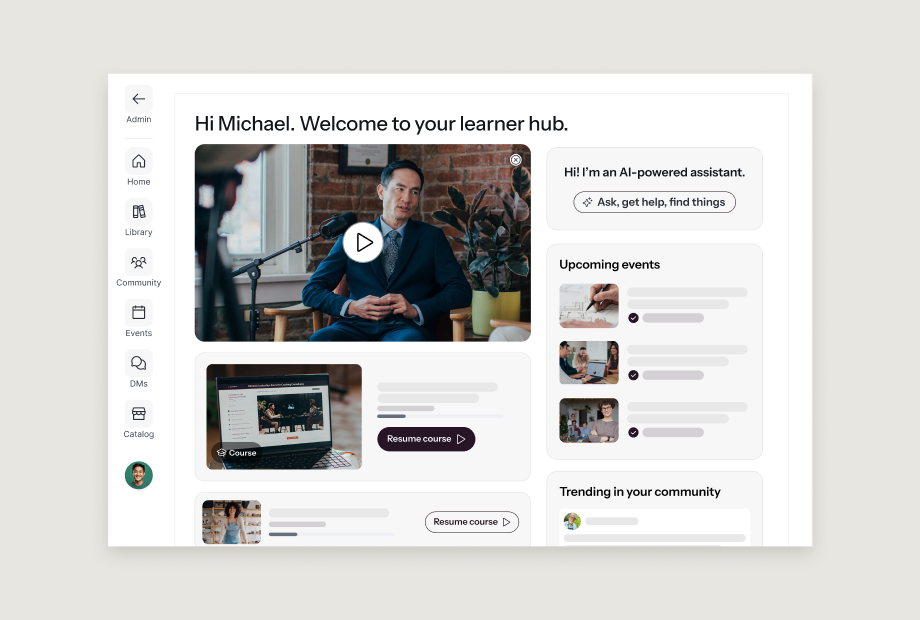
How do Thinkific and Skilljar compare for learner engagement and experience?
A strong learner experience directly impacts engagement, completion rates, and the long-term success of an education program. When learning is intuitive, visually engaging, and easy to navigate, learners are more likely to stay on track, return for additional training, and recommend programs to others — turning education into a growth driver rather than a one-time event.
Thinkific Plus is designed around the learner’s experience. Offering learners a unified, personalized home that brings courses, communities, live events, and resource libraries into one central place, so they can connect and engage in one cohesive experience.
Here we’ll compare how Thinkific and Skilljar support the learning experience.
| Thinkific | Skilljar | |
|---|---|---|
| Intuitive course builder | ||
| Unlimited Member-only Communities + spaces | — | |
| Flexible learning paths | — | |
| Mobile app for on-the-go learning | — | |
| Live learning | Limited | |
| Gamification and engagement tools | Limited | |
| AI-powered teaching assistant | (in beta) | |
| Third-party app integrations for engagement, assessment, learning experience | ||
| Out-of-the-box learner analytics |
Fit summary
Thinkific is the superior choice for organizations that prioritize learning experience to support critical business goals like retention and long-term growth. Flexible learning paths, live sessions, communities, and an AI Teaching Assistant available in one centralized location help learners progress faster and stay highly engaged. For businesses where structured onboarding matters more than ongoing engagement, Skilljar may be a good fit.
A key difference between both platforms is mobile app learning. Thinkific includes Branded Mobile, a tool to create a white-labeled mobile app that supports on-the-go learning to increase visibility, completion rates, and engagement. Skilljar does not offer a branded mobile app, making it better suited for organizations that prioritize web-based onboarding over mobile access.
“Our end users are more educated and we have better product adoption because they are more confident in what they’re doing in our system.”
— Jacob Sewell, Training and Certifications Manager, Procurify
Sales, marketing, and customization
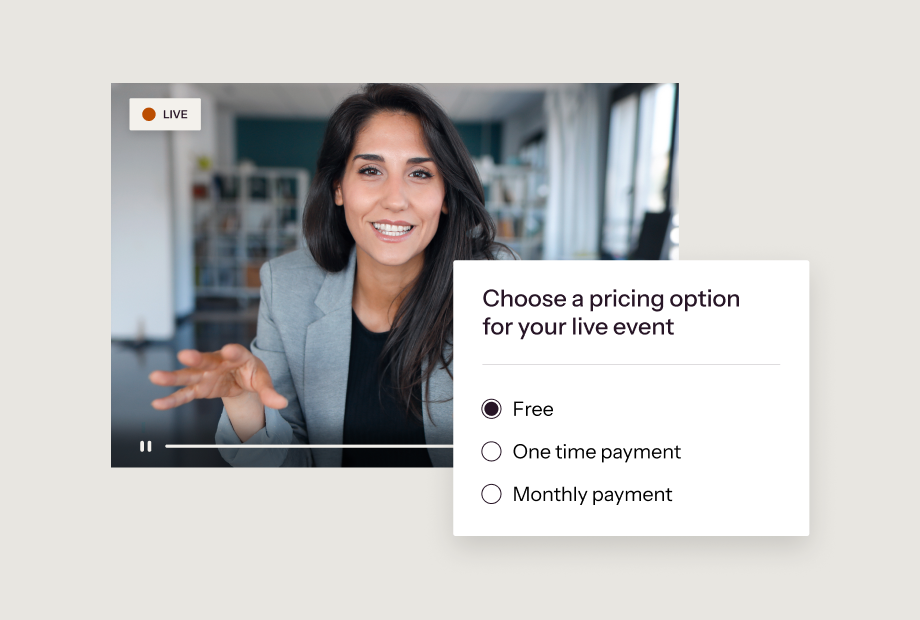
How do Thinkific and Skilljar compare for selling, marketing, and customization?
Launching your course is just the beginning. Reaching the right audience and giving them a seamless, brand-aligned experience are key drivers of sustainable growth.
With Thinkific, teams have full control over how deeply they customize their learning experience, with both built-in no-code tools and advanced customization options. Because Thinkific is designed to support revenue-generating education, it also includes native sales and marketing tools and integrations that help organizations market, sell, and scale their courses. AI-powered features further reduce manual work by automating time-consuming tasks across creation, sales, and marketing.
Skilljar offers more limited flexibility for advanced customization, as code-level changes typically require support from professional services teams. While Skilljar integrates well with existing CRM, sales, and marketing systems, it provides fewer built-in monetization tools and more limited AI-supported capabilities.
In this section, we compare how Thinkific and Skilljar approach course monetization, marketing, and design customization.
| Sales and Marketing Capabilities | Thinkific | Skilljar |
|---|---|---|
| Create free and paid courses | ||
| Revenue maximizing sales tools (Buy Now, Pay Later, order bumps, bulk selling) | Limited | |
| AI-generated sales landing pages | — | |
| AI-powered email marketing automation and copywriting | — | |
| Monetize community memberships | — | |
| Marketing integrations | ||
| CRM integrations (HubSpot, Salesforce) | ||
| Out-of-the-box marketing analytics | Limited | |
| Commerce tools: payments, bookkeeping, tax remittance, and more | — |
| Design Customization Features | Thinkific | Skilljar |
|---|---|---|
| Full design control (advanced CSS/HTML editing) | Limited (requires specialized support) | |
| No-code design tools | Limited | |
| White-label learner experience | ||
| Custom course player appearance | Limited | |
| API access for custom workflows |
Fit summary
Thinkific is built for a broader range of use cases, supporting both free and paid courses. Native ecommerce, sales, and marketing tools paired with AI-driven automations make it easier to launch and scale learning without relying on external systems, while enterprise-grade marketing, sales, and CRM integrations are available through the Thinkific App Store when needed. Skilljar may work well for customer onboarding programs where sales and marketing are managed outside the learning platform, but Thinkific is the stronger choice for B2B and B2C businesses that need an all-in-one solution designed to save time and resources as training programs grow.
“We decided we didn’t want to be constrained by limitations. If we’ve got 500 schools I want to make the training available for our schools as easy as possible. I chose Thinkific because of the API access. It gave us the ability to go as far as we wanted to.”
— Ian Richardson, CEO and Founder, Schudio
Support and Security
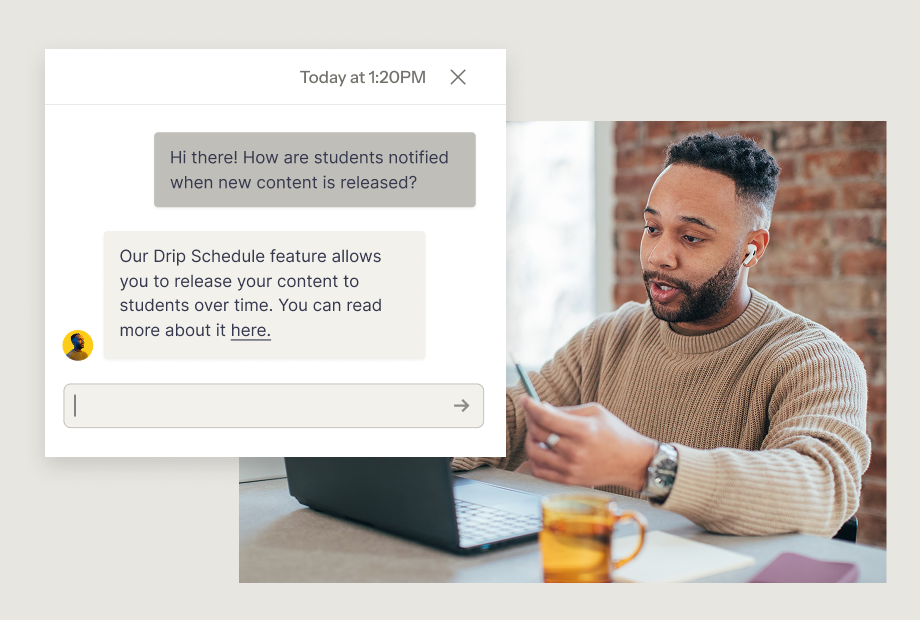
How do Thinkific and Skilljar compare for support and security?
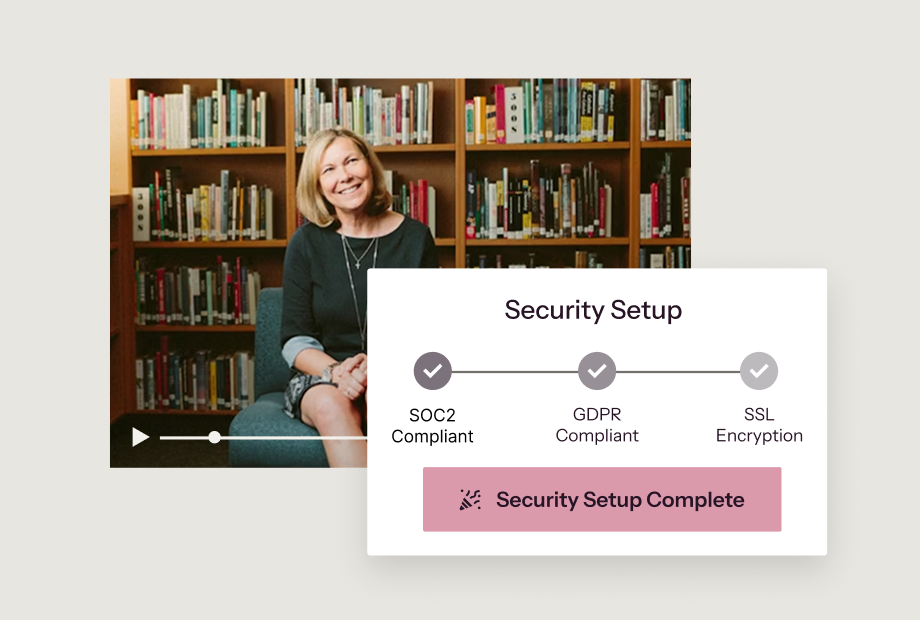
Growing academies, training businesses, and enterprises need confidence that their LMS protects learner data, offer reliable systems, and provide fast support as training programs change or issues arise.
Thinkific and Skilljar both offer enterprise-grade security compliance and comprehensive support at every phase. While there’s overlap with many provided features, Thinkific offers setup and dedicated support at no additional cost while Skilljar has different support packages with variable fees depending on your needs.
| Support Features | Thinkific | Skilljar |
|---|---|---|
| Included migration and onboarding support | — | |
| Dedicated customer success team | ||
| Ongoing technical and strategic support | ||
| No setup or support fees | — | |
| Human-led support experience |
| Security Features | Thinkific | Skilljar |
|---|---|---|
| SOC 2 Type II compliance | ||
| 99.9% uptime and 24/7 monitoring | 99% uptime | |
| SCORM-compliant secure content delivery | ||
| Secure payment processing | ||
| Single Sign-On (SSO) | ||
| Built-in security (data encryption, access controls, compliance) |
Fit summary
Thinkific and Skilljar offer many overlapping security and support features. For most buyers, the decision comes down to use case fit, speed to launch, and whether learning is tied to revenue, growth, or customer education.
Thinkific delivers 99.9% uptime, compared to Skilljar’s 99%, and includes enterprise support as part of the platform. There are no setup fees, which helps teams launch faster and keep costs predictable.
Skilljar offers tiered support packages and may suit organizations that expect to purchase customized service levels and are comfortable with setup fees, but Thinkific is the better choice for businesses that want higher reliability, faster time to value, and built-in support.
“When Epoch Education was planning a course that would welcome over 3500 participants at once, they turned to Pia, from Thinkific’s customer success team, to answer all their technical questions and even had her on standby for the launch, just in case.”
— Epoch Education Case Study
Site administration
What’s the difference between Thinkific and Skilljar for managing learners?
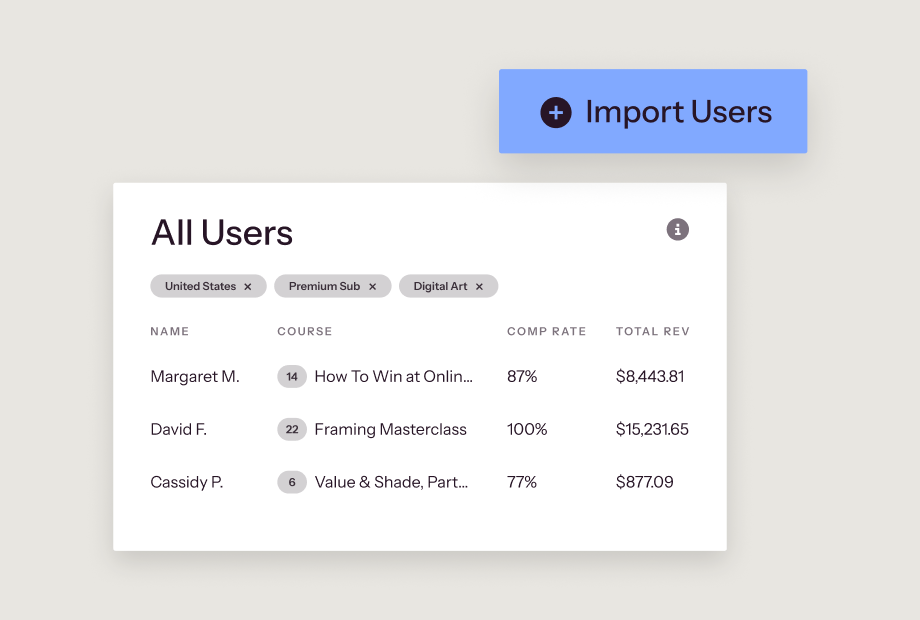
An enterprise-ready LMS platform should allow teams to easily manage learners, content, and reporting at scale. While Thinkific and Skilljar offer many overlapping site administration capabilities, the key differences lie in how much is handled natively versus through structured workflows or add-ons.
Thinkific delivers enterprise-grade administration through built-in tools, unlike typical enterprise LMS platforms. Teams can manage multiple sites, audiences, and courses from a centralized account using native publishing controls and clearly defined admin roles and permissions to collaborate efficiently at scale.
Skilljar supports centralized administration for customer onboarding and enablement. While it offers strong administrative features, deeper customization often requires additional support, which can make ongoing course updates more resource-intensive as programs grow.
This section compares how Thinkific and Skilljar compare in site administration features.
| Site Administration Features | Thinkific | Skilljar |
|---|---|---|
| Multiple websites supported | Up to 3 | — |
| Streamlined admin dashboards | ||
| Revenue and order management | ||
| Native presell and launch controls | — | |
| Built-in course lifecycle management | ||
| Ongoing reliance on vendor services | Low | High |
| Native advanced pricing and promotions | — | |
| Built-in reporting and advanced analytics | ||
| Granular admin roles and permissions | Limited | |
| Native Zapier integration |
Fit summary
While both platforms offer similar site administration features, Thinkific is the better option for teams that want to manage learners, courses, pricing, and access using native tools with less reliance on ongoing support compared to Skilljar.
“We wanted something that would allow us and our clients to track what our students were doing, what they were watching, and how many people were watching them. We really wanted to get good analytics and have everything under one roof, which is Thinkific.”
— Erin O’Donnell, Co-Founder and Managing Director of Education and Events Technology at BankersHub®
Migration and onboarding
What migration tools and support are available with Thinkific vs. Skilljar?
The right migration experience helps protect learner continuity, accelerate adoption, and reduce internal strain on teams responsible for training, customer education, or revenue programs.
Both Thinkific and Skilljar provide structured onboarding support and migration guidance. The biggest differences show up in speed to launch, reliance on vendor-led implementation, and how easily teams can migrate content and learners at scale.
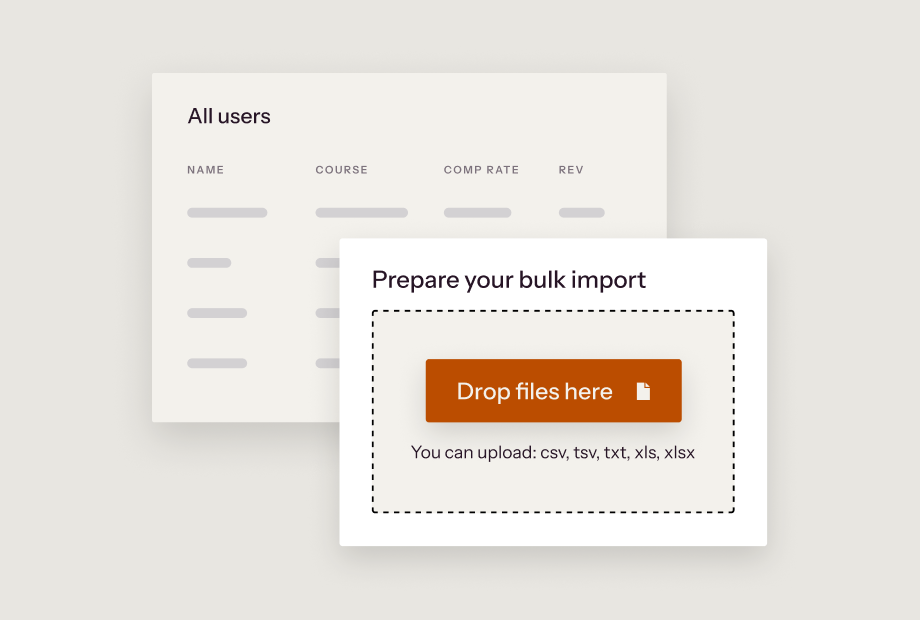
Thinkific is designed to support faster, lower-lift transitions. Teams can migrate existing course libraries, import learners in bulk, and configure learning experiences using intuitive native tools — reducing the need for lengthy implementation cycles or ongoing professional services.
Skilljar follows a more structured, phased implementation approach led by solutions architects and cross-functional alignment milestones. While this can support complex enterprise rollouts, it typically requires more internal coordination, longer timelines, and greater administrative involvement before programs go live.
| Migration Tools and Support | Thinkific | Skilljar |
|---|---|---|
| Bulk Content Uploader | Limited | |
| Bulk learner import and enrollments | ||
| 1:1 onboarding and launch support | ||
| Structured implementation framework | ||
| Typical time to launch after migration | ~8 weeks | ~2–4 months |
| SCORM content migration support | ||
| API access for migration and integrations | ||
| Reliance on vendor-led professional services | Lower | Higher |
Thinkific is the stronger fit for organizations that need a fast, scalable migration experience with minimal disruption to learners or internal teams. Native bulk migration tools, intuitive setup, and hands-on onboarding support help programs launch quickly without relying on professional services.
Skilljar may be a fit for large enterprises running highly structured customer education implementations where phased rollout governance, deep cross-functional coordination, and longer implementation timelines are expected.
Which learning platform should you choose?
The right choice between Thinkific and Skilljar comes down to what your organization needs from a learning platform — and where you want it to take you.
| Choose Thinkific if… | Choose Skilljar if… |
|---|---|
| You need to manage customer, partner, and employee education from a single platform | Your primary use case is customer onboarding with a dedicated, focused platform |
| You want to offer free training or monetize courses and community memberships to drive revenue growth | Learning is largely a support function and revenue generation isn’t a primary goal of your training strategy |
| You need an enterprise-grade platform that’s fast to implement and easy for all teams to use, regardless of technical expertise | Your team has the technical resources to support a longer, more complex implementation |
| You require a predictable pricing model that scales with your organization, plus built-in award winning support | You have a stable learner base and are comfortable with variable costs for support and onboarding services |
| You want to minimize ongoing reliance on vendor professional services | You’re comfortable with a professional services-led implementation and ongoing vendor coordination |
| You’re building your tech stack independently of Gainsight | You’re already embedded in the Gainsight customer success ecosystem and want learning data connected to those workflows |
| You want AI tools across course creation, marketing, and learner support | AI-assisted course creation and learner support meets your team’s needs |
Frequently asked questions
Which type of organization should choose Thinkific over Skilljar?
Thinkific is designed for companies, academies, and organizations that treat digital learning as both a training tool and a revenue driver. Businesses often use it to deliver learning experiences to customers, partners, and employees while selling learning products from one platform. Skilljar is typically used by enterprise teams focused on customer onboarding and product training.
How long does it typically take to launch a training program?
Implementation timelines can vary depending on the complexity of the program. Many organizations using Thinkific are able to launch within weeks because the platform includes a no-code course builder and fully hosted infrastructure. Platforms like Skilljar may involve longer implementation timelines depending on configuration requirements and program setup.
Do these platforms support mobile learning and community engagement?
Thinkific includes built-in community features that allow learners to connect with instructors and peers through dedicated spaces. Businesses can combine courses, communities, and live sessions to create engaging learning experiences. Learners can also access content through a branded mobile app experience. Skilljar focuses primarily on structured customer training programs delivered through a web-based environment.
Which platform provides tools for selling learning products?
Thinkific includes a powerful suite of built-in commerce tools that allow organizations to sell learning products such as courses, communities, coaching, and digital downloads. These tools support customizable landing pages, checkout experiences, and flexible payment options. Skilljar is generally focused on delivering customer education programs rather than selling learning products directly.
Are there additional costs for platform setup or support?
Thinkific customers work with a dedicated Customer Success Manager who helps guide onboarding, migrations, and long-term program growth. This support helps organizations successfully launch and scale their learning initiatives. Skilljar also provides onboarding and support resources depending on the service plan.
How easy is it to manage multiple learners, groups, and programs?
Thinkific provides administrative tools that allow teams to manage learning products, learner groups, and reporting from a centralized dashboard. Administrators can track learner progress, engagement, and revenue performance while organizing multiple learning programs. Skilljar also provides management tools designed to support customer education and onboarding programs.
Does Skilljar have better Salesforce integration than Thinkific?
Skilljar’s Salesforce integration is one of its most cited strengths. It offers an unidirectional sync — pushing training completion data from Skilljar into Salesforce to connect to customer health scores and CRM records — making it a strong fit for teams managing customer success workflows in Salesforce. Thinkific also offers a direct Salesforce integration. For organizations that need Salesforce connectivity alongside built-in commerce tools, AI capabilities, and community infrastructure, Thinkific delivers a broader platform without sacrificing CRM connectivity.
Our customers have earned $4.23 billion with Thinkific
Talk to one of our team members to discover how Thinkific’s award-winning platform can help you drive revenue and retention.