

Circle is a strong community platform but it’s not the best fit for every business.
Monthly costs can quickly stack up thanks to Circle’s high transaction fees and additional costs for add-ons. Circle also has limited LMS features compared to other platforms. If you’re looking to build a learning-first course business instead of a community-first one, there may be better options out there for you.
If you’re searching for Circle alternatives, this list is here to help. This blog article is for you if…
- You run an online education program and want community to support it, not replace it.
- You’re frustrated by Circle’s add-on pricing or limited assessment tools.
- You need a single platform for your courses, community, checkout, and analytics
We review seven Circle alternatives, including Thinkific, Mighty Networks, Kajabi, Skool, Podia, BuddyBoss, and Heartbeat, based on a range of criteria like course creation, community features, pricing, selling features, and scalability.
Skip ahead:
- Quick Comparison of Top Circle Alternatives
- Top 7 Circle Alternatives: Reviewed
- How We Evaluated These Circle Alternatives: Our Criteria
- Why Experts and Businesses Are Looking for Circle Alternatives
- Which Circle Alternative Is Right For You?
- Frequently Asked Questions
Quick Comparison of Top Circle Alternatives
Here’s how each alternative stacks up across the features that matter most.
| Platform | Best For | Starting Price | Native Courses | Community Features | Transaction Fees | Branded Mobile App |
| Circle | Community-first memberships | $89/month | ✅ | ✅ | 0.5% – 2% | ✅ |
| Thinkific | Experts and businesses adding community to their courses | $40/month | ✅ | ✅ | 0% | ✅ |
| Mighty Networks | Community-led memberships | $79/month | ✅ | ✅ | 0.5% – 2% | ✅ |
| Kajabi | Courses with marketing tools | $143/month | ✅ | ✅ | Variable by region | ✅ |
| Skool | Simple gamified communities | $7.50/month | ✅ | ✅ | 2.5% – 10% | ❌ |
| Podia | Built for small businesses | $42/month | ✅ | ✅ | 5% | ❌ |
| BuddyBoss | Self-hosted communities | $79/month | ✅ | ✅ | 0% | ✅ |
| Heartbeat | Brand-focused communities | $40/month | ✅ | ✅ | 1.25% – 5% | ✅ |
Top 7 Circle Alternatives: Reviewed
The truth is, there’s no one best Circle alternative. Every option in this list caters to a different type of business. Some platforms focus on education and interactive learning experiences, others are tailored to growing a community, and some stand out for their affordability for small businesses.
Thinkific is one of the strongest choices for experts and businesses that sell online courses and want learning to be the center of their program with community features built-in. Mighty Networks and Heartbeat work best for community-first businesses while Kajabi may be the better choice for teams that want marketing built into the platform. Skool focuses on simplicity with community-led features and Podia bundles courses, email, and a website in one platform.
The right choice for you depends on whether courses or community drive your business, as well as how much the costs of a platform matter to you, and the specific learning features your business needs.
Here’s our breakdown of each platform, including pros, cons, and key features you need to know.
1. Thinkific
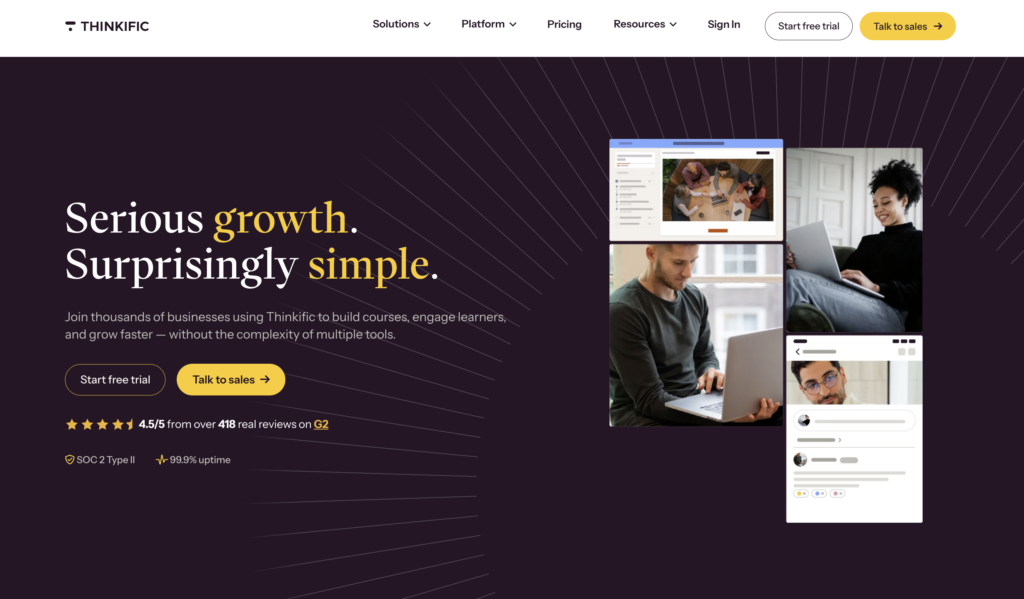
Thinkific gives experts and businesses a place to turn their expertise into a complete learning experience. Build structured courses with ease, support learners with community conversations, and create a space where learners can stay engaged.
While Circle is known as a community platform, Thinkific was designed around the needs of learning businesses from the start. Thinkific’s community features sit alongside the learning experience, helping you build stronger connections with your learners, improve learner outcomes, and build more value around your programs. Top features like private feeds, DMs, and weekly digests, as well as live cohorts and a branded mobile app help to maximize customer success and boost retention.
Key Features
- Intuitive course builder with video lessons, quizzes, and assessments
- Community spaces with a private feed, DMs, and weekly digests
- Sell digital products like templates, workbooks, and e-books
- Built-in eCommerce essentials, including checkout, gifting, and coupons
- Integrated sales and student analytics dashboard
- Branded mobile app for learning on-the-go
Pros:
- Combines learning and community in one platform
- Integrated eCommerce features to maximize revenue
- Unlimited courses and unlimited students on all plans
- Affordable pricing and 0% transaction fees
Cons:
- Some advanced features only available on higher-tier plans
- The basic plan includes one community space
Best for: Experts and companies that want to unite courses, community, eCommerce, and analytics in one place.
Pricing note: Thinkific offers three pricing tiers ranging from $40 to $164 per month, billed annually. All core plans feature 0% transaction fees and unlimited learners.
2. Mighty Networks
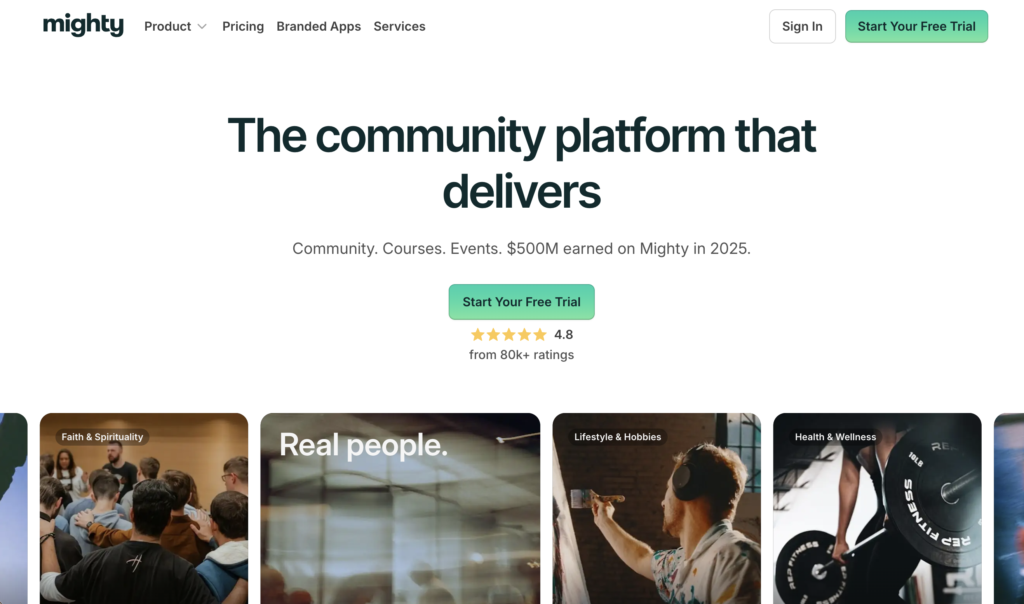
Mighty Networks focuses on helping ‘hosts’ build relationships within their communities through discussions, events, memberships, and shared experiences. This platform works well for businesses that want a community as their main product. Create monthly themes, weekly events, and daily questions to engage members and set special challenges and bonus workshops to build excitement. While there are some native course features on Mighty Networks, it’s not designed for businesses looking for robust LMS features.
Key Features
- Interactive community spaces and member profiles
- Host weekly events, challenges, and live experiences
- Range of community engagement tools
- Mobile app for members
Pros:
- Strong focus on building member relationships
- Good tools for fostering active communities
- Supports memberships and live events
Cons:
- Fewer LMS tools than learning-first platforms
- Pricing increases if businesses need more features
Best for: Community-first businesses and membership programs built around connection.
Pricing note: Mighty Networks has two plans at $79 per month and $179 per month, billed annually. They also have custom pricing for their Pro plan. Transaction fees range from 0.5% to 2% depending on your subscription.
3. Kajabi
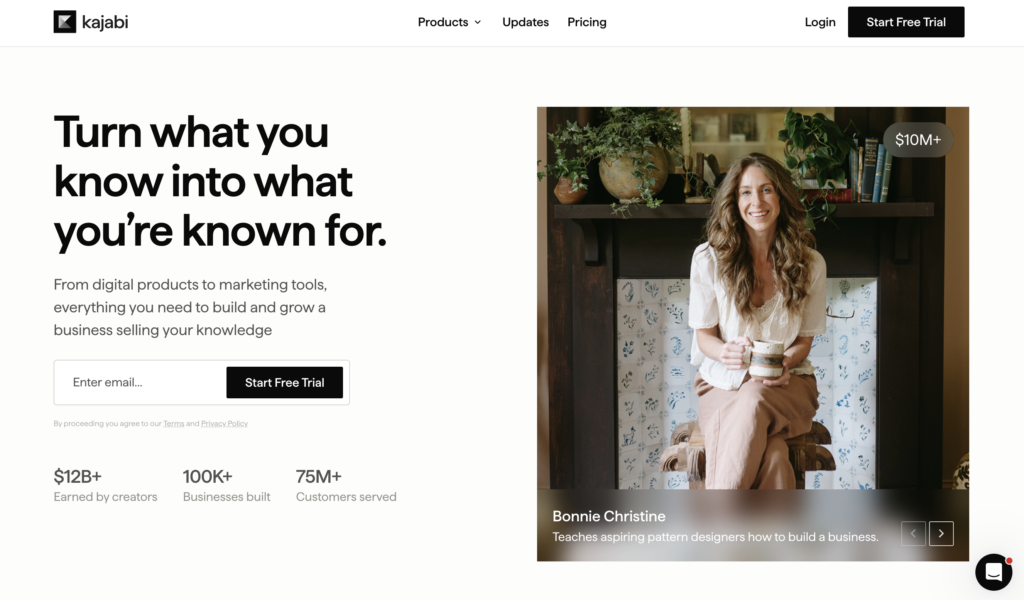
Kajabi is a top platform for growing a learning business with a suite of built-in marketing tools. It combines online courses, email marketing, landing pages, and sales funnels in one place.
Many businesses choose Kajabi because of its marketing features but creators focused on community engagement may prefer a platform designed around more interactive experiences.
Key Features
- Built-in email marketing tools
- Landing pages and sales funnels set-up
- Digital products and memberships
- Range of 3rd party integrations
Pros:
- Strong marketing features
- Unlimited landing pages, funnels, and emails on all plans
- Good fit for digital product businesses
- Reduces the need for multiple marketing tools
Cons:
- Higher starting cost than other platforms on this list
- Fewer customization options than alternatives
Best for: Learning businesses that need marketing, sales funnels, and digital product tools.
Pricing note: Pricing for Kajabi starts at $143 per month going up to $399 per month, billed annually. Kajabi Payments charges different transaction fees based on the region. Fees for card transactions in the US are 2.9% + $0.30 and fees for subscriptions and payment plans are 0.7%.
4. Skool
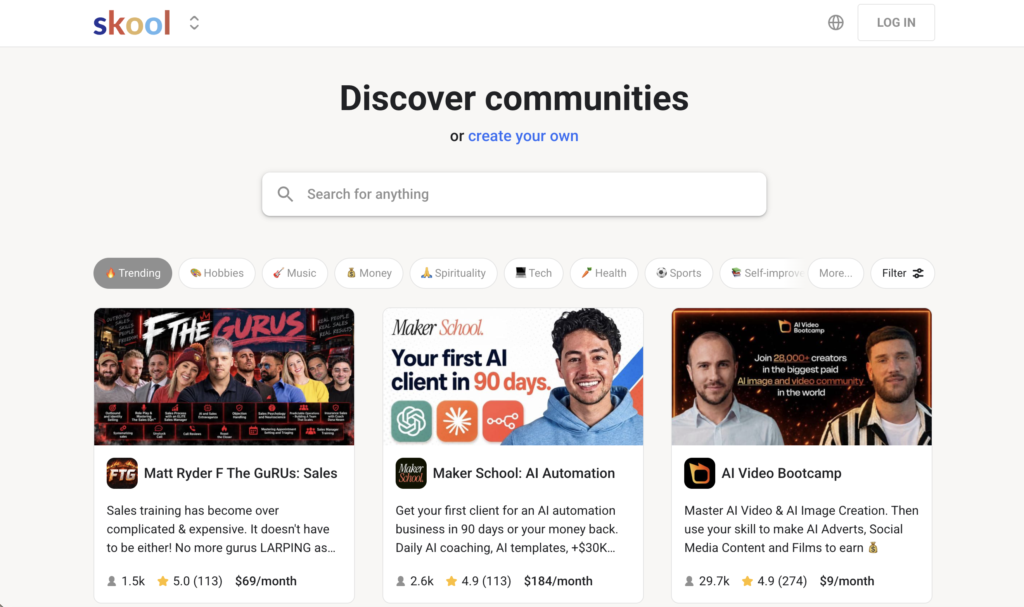
Skool is a community-first platform built around member engagement and gamification. Founded by Sam Ovens in 2019, the platform focuses on helping businesses build active communities with fewer distractions.
Skool works well for businesses that want to prioritize discussions, member interaction, and simple course delivery. With unlimited video hosting, you can upload lessons directly into the platform. Skool is firmly community-led so businesses that need more robust learning tools may prefer a more dedicated LMS platform.
Key Features
- Community discussions and member profiles
- Gamification features such as points and leaderboards
- Integrated event scheduling
- Simple course builder with unlimited native video hosting
Pros:
- Easy-to-use design for members
- Fosters engagement through gamification
- Simple setup for community businesses
Cons:
- Limited LMS features
- High transaction fees
Best for: Businesses who want a gamified community with a flat pricing model.
Pricing note: Skool offers an affordable $7.50 per month Hobby plan with 10% transaction fees or a Pro plan at $82 per month with 2.9% transaction fees, billed annually.
5. Podia

Podia is an accessible option for small businesses and individual experts who want to sell courses and digital products alongside a basic community. It offers email features, events, coaching, websites, and community spaces making it a popular choice for small businesses looking for simplicity and one tool to do it all.
The platform also supports course sales, memberships, and storefronts. Businesses that need deeper community engagement features or in-depth learning analytics may need additional tools to help.
Key Features
- Community features like group chats, DMs, and topic spaces
- Email marketing and newsletter tools
- Built-in custom website builder
- 1:1 and group coaching
Pros:
- Simple interface for beginners
- Combines several tools in one platform
- Affordable pricing
Cons:
- Community features are more basic than other community-first platforms
- No mobile app available
Best for: Businesses looking for a simple platform for courses, email marketing, and memberships.
Pricing note: There are three Podia plans starting at $42 per month and going up to $150 per month, billed annually. Podia charges up to 5% transaction fees per sale.
6. BuddyBoss
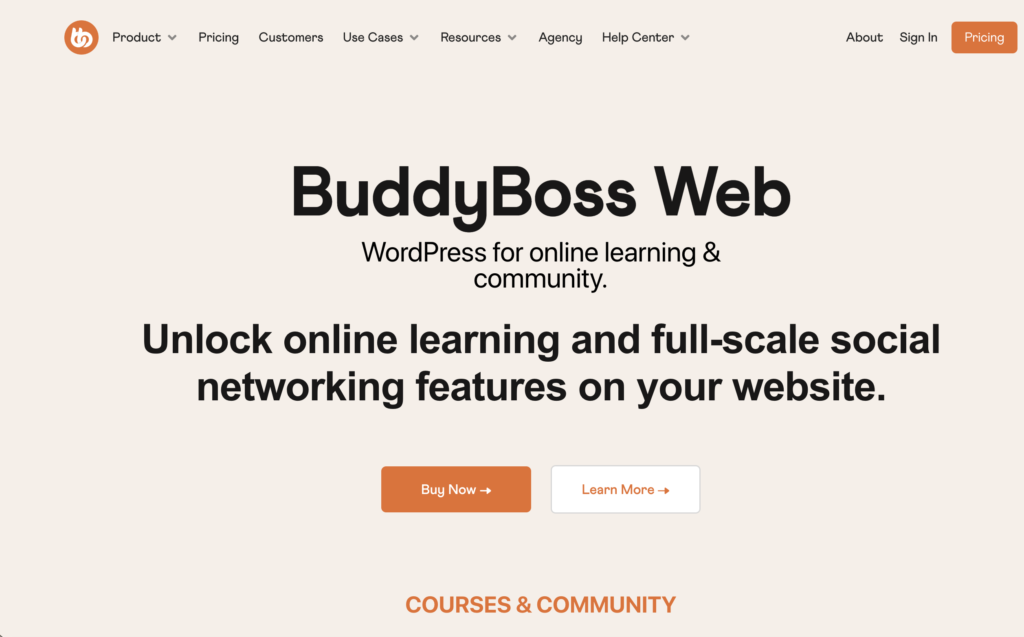
BuddyBoss is designed for organizations that want control over their data, branding, and hosting environment. It provides tools for building a custom community and online learning experience using WordPress.
Unlike other platforms, BuddyBoss gives businesses more flexibility over customization. This approach suits organizations that are more tech-savvy and want more control over their business or a fully branded custom platform.
Key Features
- WordPress-based community platform
- Deep custom branding
- Mobile app options
- Integration with range of learning plugins
Pros:
- High level of customization
- Greater control over hosting and data
- Flexible WordPress capabilities
Cons:
- Requires more technical expertise than other platforms
- Hosting and maintenance adds complexity
Best for: Businesses looking for deep customization and self-hosting.
Pricing note: Pricing for BuddyBoss Web starts at $299 per year (approximately $25 per month). For small businesses, the BuddyBoss App offers basic course features with no community tools from $79 per month, going up to $179 for the higher plan. There is also a Done-For-You bundle option for $2499.
7. Heartbeat
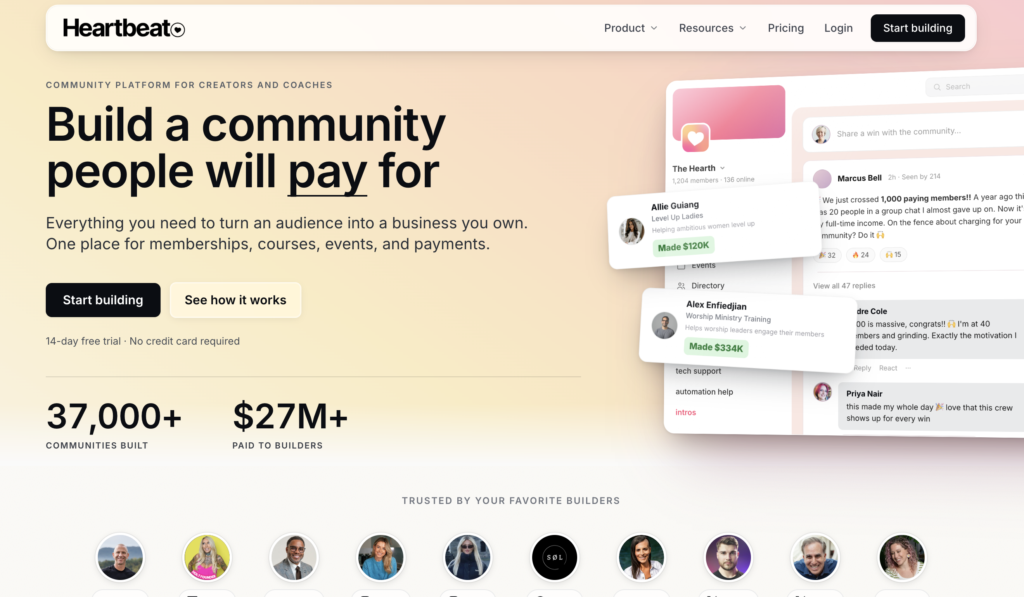
Heartbeat is a brand-first community platform focused on member experience and flexible design. It is a newer and smaller platform compared with Circle or Mighty Networks offering a wide range of pricing options like bundled offers, cohort pricing, time-limited access, and pay-as-you-want pricing. The platform emphasizes customization and also benefits from robust events features like automatic calendar invites, reminders, and tiered ticket pricing.
Key Features
- Custom community spaces
- Full-featured events tools
- Range of branding options
- Flexible pricing for selling courses and memberships
Pros:
- Strong focus on design and branding
- Modern community experience
- Customizable pricing
Cons:
- Limited course features compared to competitors
- High transaction fees on lower tiers
Best for: Brands that want a highly customized community experience.
Pricing note: HeartBeat pricing ranges from $40 per month to $766 per month, billed annually. Transaction fees vary from 1.25% to 5% depending on the plan.
How we evaluated these circle alternatives: our criteria
We used a range of criteria to evaluate these Circle alternatives. Course creation and learning features were a top factor because education-first businesses need tools for building lessons, organizing their content, measuring progress, and supporting learner outcomes. These platforms were evaluated on how well they support structured learning experiences, including key features like assignments and learner analytics.
Our selection prioritized platforms where courses and communities work together natively, rather than requiring separate tools. Community engagement tools were also reviewed as they’re central to member retention. Features such as discussions, DMs, member profiles, events, and notifications were all considered in our criteria.
Any successful business needs to make money so we also evaluated platforms based on selling and eCommerce features, looking at how easily businesses can sell courses, memberships, and digital products. We also included checkout options, payment tools, and customizable pricing in our comparison.
One of the main drawbacks of Circle is the costs of using the platform so pricing transparency was a key consideration in our selection process. We looked at starting prices, additional fees, and pricing transparency to find the best fit for budget-conscious businesses and growing organizations alike.
Finally, scalability and branding were also important factors in our selection. Growing businesses need platforms that support larger audiences and offer more robust branding options like white-labeling and granular customization. We looked out for platforms that offer control over the customer experience to help you build the business you want.
Why experts and businesses are looking for Circle alternatives
- Cost Escalation
Circle offers a strong community experience but some businesses find that costs can skyrocket as they add more functionality. Circle’s Professional plan starts at $89 per month when billed annually but transaction fees and additional features such as Email Hub and custom profile fields can affect the total cost of running a community business on the platform.
Circle.so pricing in 2026 starts at $89/month (Professional, annual) and climbs to $199/month (Business) with 0.5 to 2% transaction fees stacked on Stripe’s 2.9% + $0.30. Source
- Limited Learning Tools
Circle provides a wide range of community features but businesses focused on learning may need more robust learning tools that Circle doesn’t offer. The platform lacks some key features like assessments, certificates, and in-depth learner progress tracking, all of which are important for many learning businesses.
- Revenue Model Mismatch
Circle’s community-led approach works well for memberships and discussions but learning-first businesses may need dedicated tools for lessons, assessments, certificates, and learning progress. Different tools support different business models and businesses that sell courses as their primary product may need an alternative platform built around structured education.
Which Circle Alternative is Right for You?
| If You Need… | Best Choice | Why |
| Structured courses + community in one platform | Thinkific | Built for learning first with community features included. |
| Community-first coaching with peer connection | Mighty Networks | Designed around member interactions and relationships. |
| Full marketing stack with courses | Kajabi | Combines courses with sales and marketing tools. |
| Simple, gamified community | Skool | Focuses on engagement and easy community management. |
| An approachable platform for small businesses and individual experts | Podia | Offers courses, products, and memberships in one accessible platform. |
The right platform for you depends on what drives your business. For experts and businesses focused on learning, Thinkific is a strong fit thanks to its robust learning features within the online course platform with added community features to enhance the learner experience.
Build Your Learning Community on Thinkific
Thinkific helps experts and businesses combine courses, community, and eCommerce without trying to stitch multiple tools together. The learning-first platform supports structured education while giving learners a place to connect, discuss, and engage. Take advantage of a full-featured LMS with built-in community features and zero platform transaction fees, so more of every sale stays in your business.
Frequently Asked Questions
1. What is the best alternative to Circle for course creators?
Thinkific is one of the best Circle alternatives for experts and businesses that run online education programs because it combines structured learning tools with community features. You can build courses, use assessments and certificates, and manage your checkout in one platform. This makes it a top choice for businesses where education is the main product and community supports learner success.
2. Is Circle worth the price in 2026?
Circle can be worth the price for businesses that prioritize community engagement and member interaction. The platform starts at $89 per month on the Professional annual plan, but add-ons such as Email Hub, custom profile fields, and 0.5–2% transaction fees can increase total costs. Learning-first platforms may offer better value for course businesses.
3. Can you use Thinkific as a community platform?
Thinkific can be used as an online community platform through Thinkific Communities. Communities include discussion spaces, member profiles, push notifications, and a mobile app. Communities are designed to be branded and ad-free, helping you keep learners engaged in your learning environment and increase customer retention rates.
4. How do Circle and Thinkific compare on pricing?
Thinkific pricing starts at $40 per month when billed annually, with 0% platform transaction fees. Circle starts at $89 per month annually and includes additional 0.5–2% transaction fees, as well as paid add-ons for features such as email marketing.
5. What are the main limitations of Circle?
Circle’s main limitations for learning businesses are related to learning tools. The platform doesn’t offer features like native quizzes, graded assessments, or course completion certificates. You may also need paid add-ons for email marketing and custom profile fields, while some automation workflows are limited to higher-tier plans.
6.How did you evaluate and choose these Circle alternatives?
These Circle alternatives were evaluated using five core criteria: course creation depth, community engagement tools, selling features, pricing transparency, and scalability. This comparison prioritized platforms where courses and community work together. This approach helps you choose the tools that match your business model and your overall growth goals.