
Healthcare teams don’t have time to waste. Between staffing shortages, rising turnover, and constant regulatory change, training has become one of the hardest things to get right, and one of the most important.
Hospital turnover rates in the U.S. sit at 23%. That means onboarding isn’t a one-time event. It’s a continuous process, running alongside compliance updates, new protocols, and the growing pressure to do more with fewer people.
A healthcare LMS should make that easier, not add another system for already-stretched teams to manage. The best platforms today handle HIPAA-aligned training, role-specific learning, and compliance tracking without creating administrative overhead.
This guide breaks down what to look for in a healthcare LMS, compares leading platforms by real-world use case, and helps you find a solution built for how healthcare organizations actually operate.
Skip ahead:
- What is a healthcare LMS?
- What are the benefits of a healthcare LMS?
- Common features of Healthcare LMS Software
- Top Healthcare LMS Platforms for 2026 (by use case)
- Examples of Healthcare Organizations using an LMS
- Challenges with Healthcare LMS Software (what to watch out for)
- Selecting and buying your HealthCare LMS
- Conclusion
What is a healthcare LMS?
A healthcare learning management system (healthcare LMS) is a secure digital platform used to deliver, manage, track, and analyze training programs for healthcare professionals, partners, and healthcare-related organizations.
In 2026, a healthcare LMS is no longer just a course repository, but a critical system for medical training, regulatory compliance, and workforce readiness.
Healthcare LMS platforms are used to support a wide range of training initiatives, including onboarding, continuing medical education (CME), product and device training, compliance education, and role-based clinical upskilling. Modern platforms increasingly incorporate AI-driven personalization and advanced analytics to ensure training is timely, relevant, and measurable.
With a healthcare LMS, organizations can:
- Deliver online medical training through courses, video modules, virtual classrooms, and blended learning experiences
- Assess learner knowledge using quizzes, exams, simulations, and competency-based evaluations
- Track learner progress and completion rates across individuals, teams, roles, and locations
- Measure training impact on performance, compliance status, and time-to-competency using analytics and reporting tools
- Manage certifications, accreditations, and renewals, ensuring learners remain compliant with regulatory and organizational requirements
For healthcare organizations operating in highly regulated environments, the right healthcare LMS also plays a key role in supporting HIPAA-aligned training workflows, maintaining audit-ready records, and delivering personalized learning experiences without increasing administrative burden.
What are the benefits of a healthcare LMS?
Key benefits of using a healthcare LMS include:
Flexible, accessible medical training
Healthcare professionals can access medical training and compliance courses anytime, anywhere—whether on desktop or mobile—making it easier to learn across shifts, locations, and roles. This flexibility is critical for frontline teams operating in time-constrained, high-pressure environments.
Improved performance through personalized learning
AI-powered healthcare LMS platforms enable personalized learning paths based on role, experience level, and prior performance. Instead of one-size-fits-all training, learners receive targeted content that helps them reach competency faster, improving clinical consistency, product adoption, and overall performance.
Faster onboarding and reduced time-to-competency
With structured learning paths, automated assignments, and role-based content delivery, healthcare organizations can onboard new staff, partners, or customers more efficiently —a major advantage in an industry facing persistent staffing shortages and high turnover.
Cost efficiency at scale
Delivering training digitally reduces costs associated with in-person sessions, travel, and manual administration. Over time, healthcare LMS platforms also help organizations reduce rework, minimize training delays, and scale education programs without proportionally increasing costs.
Stronger compliance and audit readiness
Healthcare LMS platforms support HIPAA compliance and regulatory training by ensuring required courses are completed, tracked, and documented. Centralized records, automated reminders, and role-based access controls help organizations maintain audit-ready training histories and reduce compliance risk.
Data-driven insights with advanced analytics
Modern LMS platforms provide advanced analytics that go beyond basic completion rates. Healthcare organizations can track engagement, identify at-risk learners, monitor training effectiveness, and use predictive insights to anticipate future training needs, enabling more proactive learning and development strategies.
Streamlined customer and partner onboarding
For healthcare and healthtech organizations that train customers or partners, an LMS simplifies onboarding and ongoing education. Consistent training experiences improve satisfaction, reduce support demands, and ensure external users can safely and effectively use healthcare products or services.
Common features of Healthcare LMS Software
When evaluating a healthcare LMS, organizations should look for a platform with these key features:
- Compliance and certification management. Track mandatory training, certifications, and expiration dates with role-based assignments, automated reminders, and audit-ready records to support HIPAA compliance and regulatory requirements.
- E-learning content management. Host and deliver diverse learning content including video, audio, assessments, and interactive modules, with support for standards like SCORM to track progress and completion.
- Centralized learner training records. Maintain a single, secure system of record for course completions, certifications, assessments, and historical training data.
- Live training and virtual classrooms. Support instructor-led training, webinars, and hybrid learning through built-in or integrated video conferencing tools.
- Mobile learning access. Enable learners to access medical training and compliance content on mobile devices, supporting shift-based work and learning on the go.
- Social learning and community features. Encourage engagement through discussion forums, peer interaction, and knowledge sharing to reinforce learning outcomes.
- Gamification and engagement tools. Use badges, progress indicators, or milestones to improve motivation and completion rates, particularly for recurring training.
- Knowledge assessment and competency evaluation. Assess learner understanding through quizzes, surveys, and competency-based evaluations to identify skill gaps and training needs.
- Advanced reporting and analytics. Go beyond basic completion reports with analytics that surface engagement trends, learning effectiveness, and time-to-competency across roles and teams.
- Predictive learning analytics. Identify at-risk learners, anticipate training needs, and proactively adjust programs using data-driven insights.
- AI-powered learning and automation. Use AI to assist with content creation, personalize learning paths, automate learner support, and help users find relevant training faster.
- Secure communications and notifications. Send automated emails, alerts, and reminders for assignments, deadlines, certifications, and policy updates.
Top Healthcare LMS Platforms for 2026 (by use case)
To understand your options in 2026, it’s important to first acknowledge that “healthcare LMS” is no longer a single category. Today, healthcare organizations use learning platforms for very different purposes—from workforce compliance and credentialing to customer, partner, and product education.
As a result, the “best” healthcare LMS depends heavily on who you’re training, what you’re training them on, and how much regulatory oversight is required.
Below, we group leading healthcare LMS platforms by the problems they’re best suited to solve. This approach reflects how healthcare organizations actually evaluate learning technology today based on use case fit, scalability, AI capabilities, analytics depth, and compliance readiness.
Best healthcare LMS for extended enterprise and corporate training
These platforms are best suited for healthcare and healthtech organizations training customers, partners, distributors, and internal teams—particularly where personalization, analytics, integrations, and speed-to-value matter.
- Thinkific Plus
Best for: AI-driven corporate and extended enterprise training for healthcare and healthtech organizations
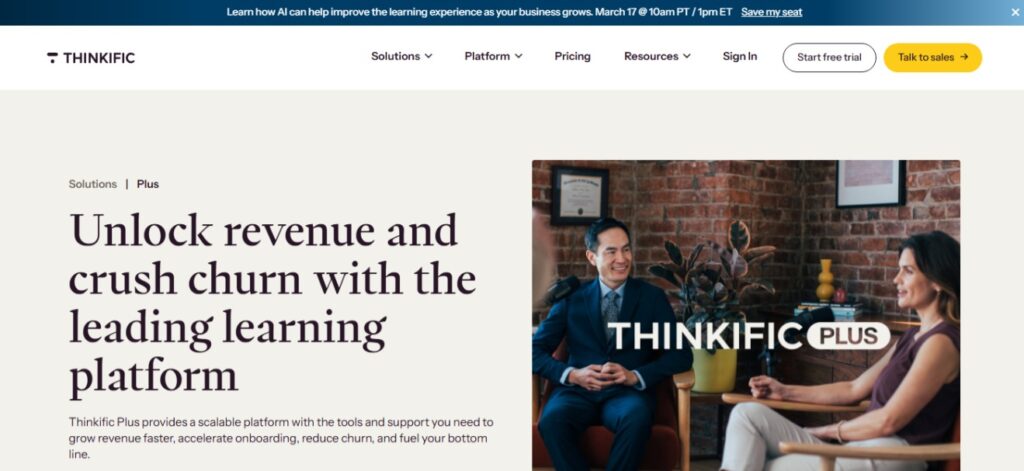
Thinkific Plus is an enterprise-grade LMS designed for organizations that need to deliver scalable, personalized training beyond their internal workforce. In healthcare and healthtech contexts, it’s commonly used for customer education, partner enablement, product and device training, and certification programs—where consistency, analytics, and learner experience are critical.
What differentiates Thinkific Plus is its focus on AI-powered efficiency, flexible learning design, and actionable analytics, rather than rigid, compliance-first workflows. This makes it a strong fit for healthcare organizations that need to educate external audiences at scale without overwhelming internal teams.
Thinkific Plus supports a wide range of learning experiences, including on-demand courses, video-based training, live virtual sessions, and community-driven learning. Its mobile-friendly delivery ensures learners can access training across roles, locations, and schedules.
From an AI perspective, Thinkific Plus increasingly focuses on AI-driven corporate training workflows. Features like AI-assisted content creation help teams build and organize training faster, while Thinker—Thinkific’s AI teaching assistant—helps learners find relevant information, get answers in context, and stay engaged without increasing instructor or support workload. This is particularly valuable in healthcare environments where subject matter is complex and learner support demand is high.
On the analytics side, Thinkific Plus provides visibility into engagement, completion, and learning effectiveness across audiences. These insights help L&D and enablement teams identify drop-off points, optimize learning paths, and demonstrate the impact of training programs, supporting more predictive, data-informed L&D decision-making over time.
Key features:
- Flexible course creation and content management for healthcare training programs
- AI-assisted content creation and learner support (Thinker AI teaching assistant)
- Personalized learning experiences for customers, partners, and internal teams
- Advanced analytics to measure engagement, effectiveness, and training impact
- Community and social learning tools to support peer interaction
- Mobile-friendly delivery for distributed and shift-based learners
- SSO, role-based access controls, and enterprise-grade security
- Extensive integrations and app ecosystem via the Thinkific App Store
Pros:
- Strong fit for extended enterprise and external healthcare training use cases
- Fast time-to-value with minimal technical overhead
- Scales across multiple audiences, brands, or programs from a single platform
- AI features reduce administrative and learner support burden
- Dedicated enterprise-level customer success support
Cons:
- Not a healthcare-native compliance or credentialing system for hospitals
- SCORM supported via multimedia lessons rather than native authoring
Bottom line:
Thinkific Plus is an excellent choice for healthcare and healthtech organizations that need AI-driven, analytics-backed training for customers, partners, and distributed teams. It’s especially well-suited for organizations prioritizing personalization, scalability, and insight over rigid compliance workflows.
- Docebo
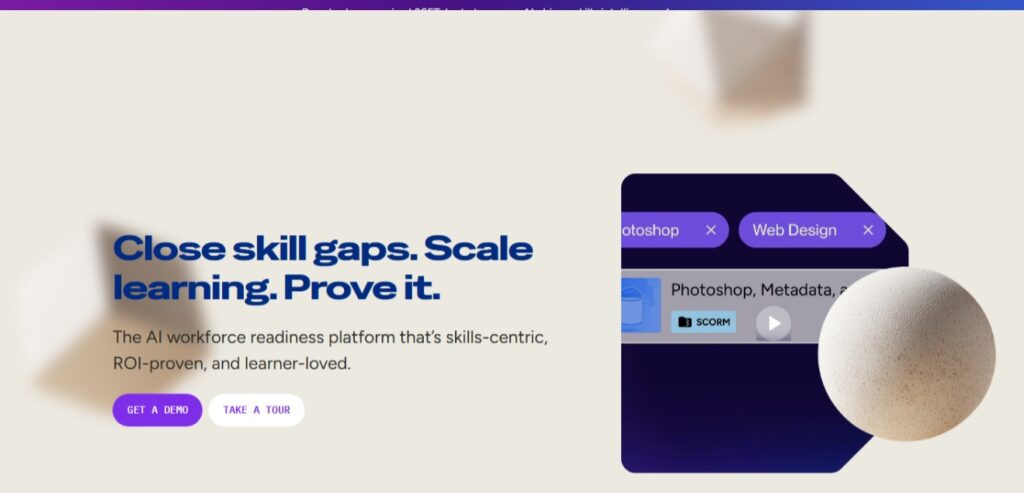
Docebo is an enterprise LMS known for its AI-driven learning automation and personalization, commonly used by large organizations running complex, multi-audience training programs at scale.
Best for: Enterprise healthcare and healthtech organizations that need an AI-forward LMS for large-scale internal and extended enterprise training programs.
Key features:
- AI-assisted content creation and content discovery
- Personalized and role-based learning experiences
- Support for asynchronous, self-paced learning
- Enterprise-grade reporting and dashboards
- Mobile-friendly learning delivery
Pros:
- Strong AI capabilities compared to many traditional LMS platforms
- Scales well across large, distributed learner populations
- Flexible use cases for internal and external training
Cons:
- Can be complex to configure and manage
- Higher cost compared to simpler LMS solutions
- Absorb LMS
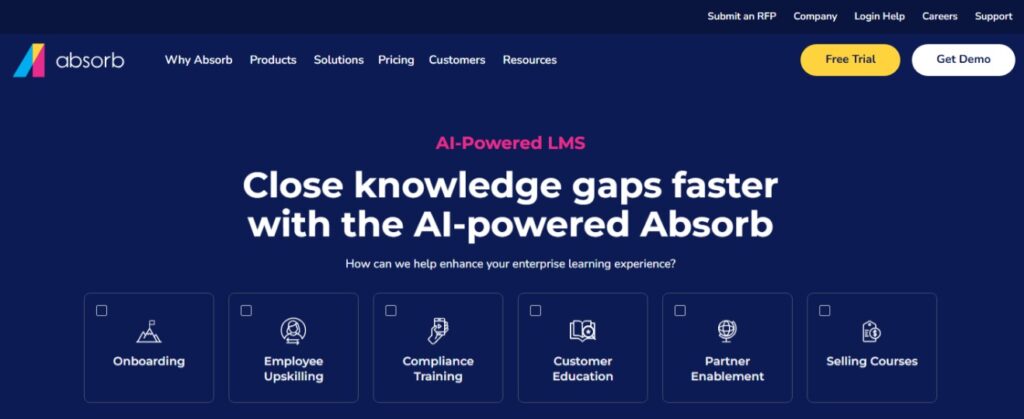
Absorb LMS is a cloud-based enterprise platform focused on usability, automation, and integrations, making it a popular choice for organizations that want efficient training operations without heavy customization.
Best for: Healthcare organizations seeking a flexible, enterprise LMS with strong integrations and a streamlined learner experience.
Key features:
- Cloud-based LMS with modern UI
- Integrations with HRIS and business systems
- Automation tools for enrollment and learning paths
- Mobile learning support
- Built-in reporting and analytics
Pros:
- User-friendly interface for admins and learners
- Strong customer support and onboarding
- Reliable integrations with enterprise systems
Cons:
- Less healthcare-specific functionality out of the box
- AI and analytics capabilities are more operational than predictive
Best healthcare LMS for workforce compliance and credentialing
These platforms are purpose-built for healthcare workforce training, where regulatory compliance, credential tracking, and audit readiness are primary concerns. They are most commonly used by hospitals, health systems, and clinical organizations managing large, regulated workforces.
- HealthStream
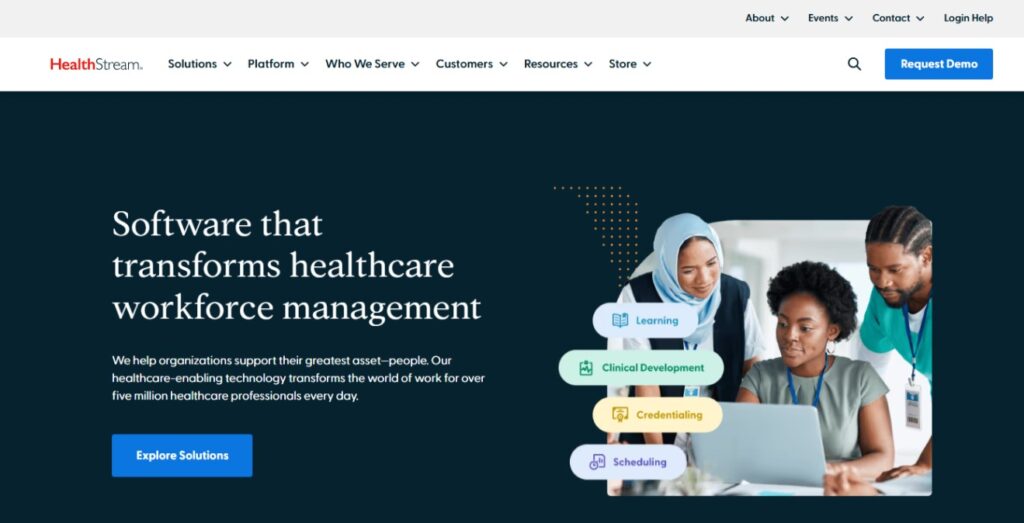
HealthStream is a healthcare-native LMS designed specifically for clinical workforce compliance, credentialing, and competency management across hospitals and health systems.
Best for: Hospitals and healthcare organizations that require healthcare-specific compliance training, credential tracking, and audit-ready reporting.
Key features:
- Healthcare-specific compliance and regulatory training
- Credentialing and certification management
- Competency assessments and clinical education tools
- Simulation-based learning capabilities
- Workforce performance and compliance reporting
Pros:
- Purpose-built for healthcare regulatory environments
- Strong support for audits, accreditation, and credentialing
- Widely adopted across hospitals and health systems
Cons:
- Less flexible for external or extended enterprise training
- Limited customization compared to enterprise LMS platforms
- Relias
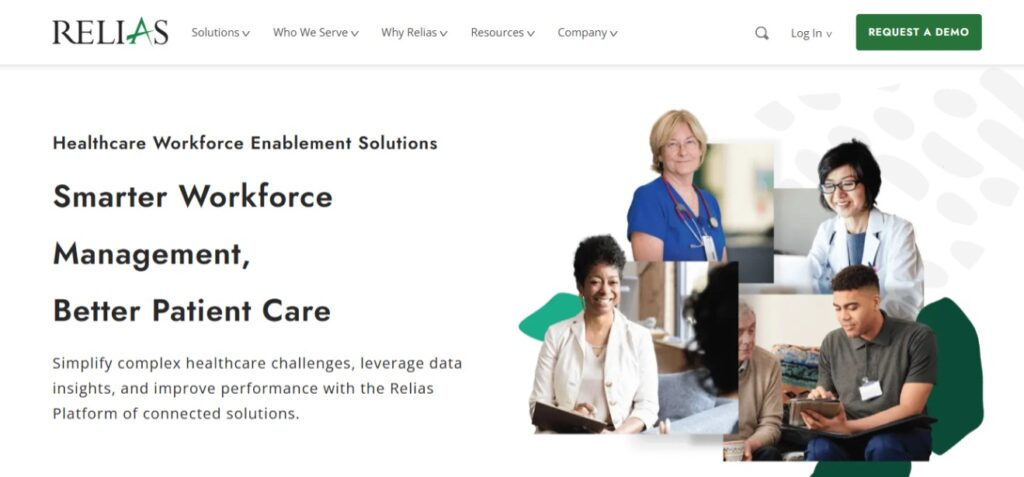
Relias is a healthcare-focused learning platform that combines compliance training, skills assessments, and workforce analytics for clinical and non-clinical staff.
Best for: Healthcare providers focused on maintaining compliance while improving clinical competency and workforce readiness.
Key features:
- Role-based compliance and continuing education content
- Skills assessments and competency evaluations
- Workforce analytics and performance insights
- Automated assignment and tracking of mandatory training
Pros:
- Strong healthcare-specific content library
- Designed for continuous clinical competency development
- Analytics tailored to workforce and compliance needs
Cons:
- Less suitable for customer or partner education use cases
- Limited flexibility for custom learning experiences
- MedTrainer
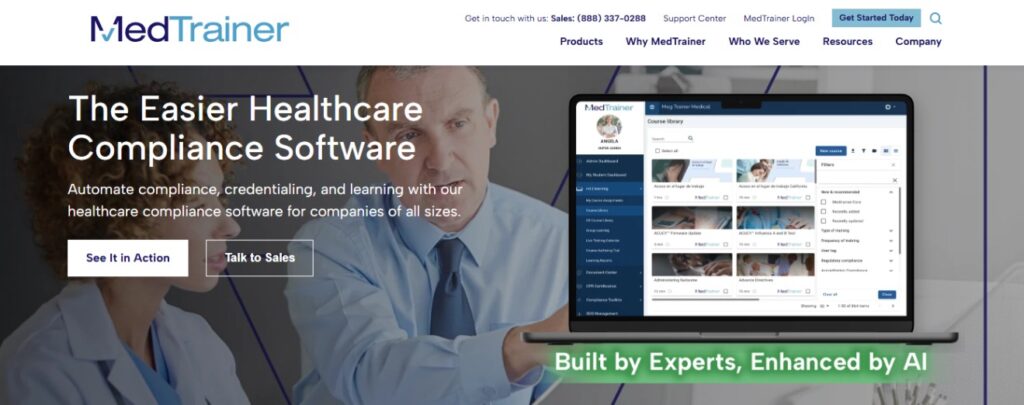
MedTrainer is a compliance-focused platform designed to help healthcare organizations centralize regulatory training, credentialing, and policy management.
Best for: Healthcare organizations prioritizing compliance management, credential tracking, and risk reduction.
Key features:
- Regulatory and compliance training management
- Credential and license tracking with automated alerts
- Policy and document management
- Audit-ready reporting and dashboards
Pros:
- Strong focus on reducing compliance risk
- Centralized system for training, policies, and credentials
- Easy to use for compliance and HR teams
Cons:
- Limited learning experience and personalization features
- Not designed for extended enterprise or AI-driven training
Best open-source and customizable healthcare LMS platforms
These platforms are best suited for healthcare organizations that require deep customization, self-hosting options, or tight control over integrations and data architecture. They are often selected by organizations with strong internal IT resources or external implementation partners.
- Moodle
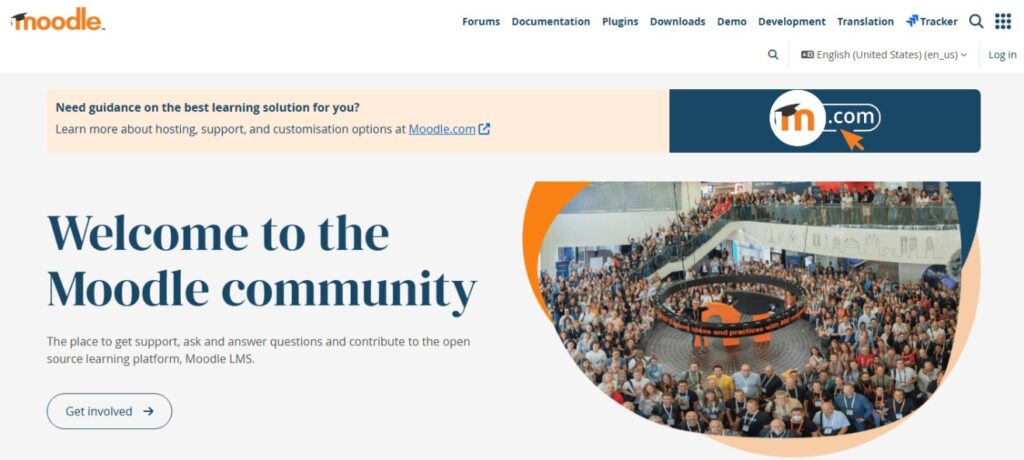
Moodle is a widely used open-source LMS that healthcare organizations often choose for its flexibility, extensibility, and large global ecosystem.
Best for: Healthcare organizations with internal technical expertise that need a highly customizable, open-source LMS.
Key features:
- Open-source LMS with a large plugin ecosystem
- Support for a wide range of content types and learning formats
- Mobile learning via native mobile app
- Extensive customization through plugins and themes
- Integrations with third-party tools and systems
Pros:
- Highly customizable and flexible
- No vendor lock-in due to open-source licensing
- Large global community and ecosystem
Cons:
- Requires significant technical resources to deploy and maintain
- User experience and performance depend heavily on implementation quality
- Totara Learning
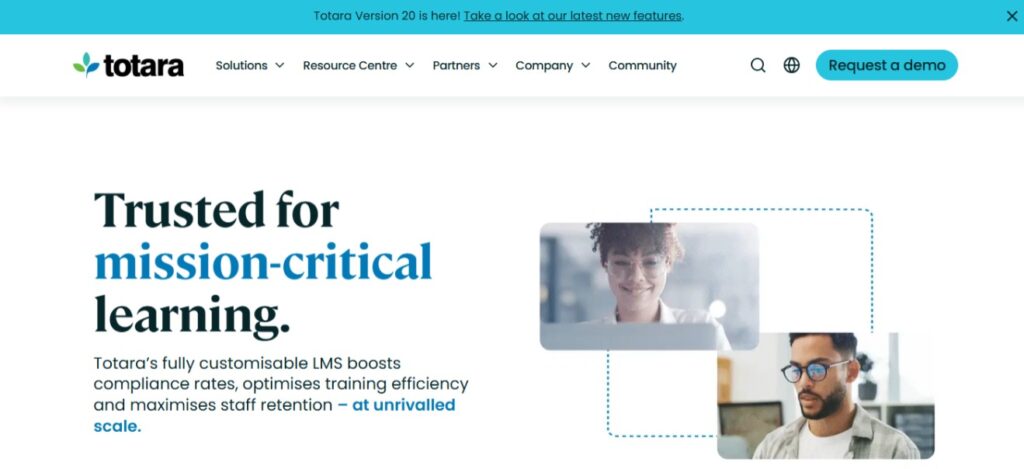
Totara Learning is an open-source LMS built on Moodle, designed specifically for enterprise and workforce learning environments that require structured training and certification management.
Best for: Healthcare organizations that want open-source flexibility with added enterprise features for workforce training.
Key features:
- Open-source platform with enterprise-focused enhancements
- Certification and compliance management tools
- Social learning and performance management features
- Mobile learning support
- Customizable learning pathways
Pros:
- Greater workforce and compliance focus than standard Moodle
- Highly customizable for complex organizational needs
- Strong support ecosystem through Totara partners
Cons:
- Higher total cost of ownership due to implementation and support needs
- Less intuitive user experience compared to modern SaaS LMS platforms
Examples of Healthcare Organizations using an LMS
Now that we’ve gone over some of the best healthcare LMS platforms let’s take a look at some examples of healthcare organizations using an LMS.
In the face of the growing COVID-19 pandemic, the Mohammed Bin Rashid University of Medicine and Health Sciences (MBRU) launched an interactive online course called MBRU Community Immunity Ambassador Program. With the help of Thinkific Plus, the program has reached more than 940,000 people from all over the world and is showing no signs of slowing down.
Another example is IntelyCare, a nurse staffing software with a proven track record of addressing critical problems facing nursing professionals. When COVID-19 began to spread, staff members at skilled nursing and assisted living facilities found themselves underprepared for handling the growing pandemic with no affordable educational training to turn to. Through Thinkific Plus, IntelyCare launched its first online course, reaching more than 500,000 students across 30+ countries.
Challenges with Healthcare LMS Software (what to watch out for)
Choosing a healthcare LMS involves more than evaluating features. Healthcare organizations must account for regulatory risk, data governance, integration complexity, and AI oversight—all of which can significantly impact long-term success.
Key challenges to consider include:
- HIPAA compliance and data governance. Healthcare LMS platforms often store sensitive training records, user data, and in some cases protected health information (PHI). Organizations must ensure the LMS supports strong access controls, audit trails, encryption, and role-based permissions — and clearly understand where responsibility for HIPAA compliance lies between the vendor and the organization.
- AI governance and transparency. As AI becomes more common in healthcare LMS platforms, organizations should understand how AI features are trained, what data they use, and how outputs are governed. Poorly implemented AI can introduce compliance, accuracy, or trust risks — especially in regulated healthcare environments.
- Integration and interoperability limitations. Healthcare organizations rarely operate a single system in isolation. An LMS must integrate with HRIS, identity providers (SSO), CRM systems, analytics tools, and content libraries. Limited API access or weak integrations can create data silos and manual workarounds.
- Scalability across audiences and use cases. Many LMS platforms struggle when asked to support multiple learner populations—such as internal staff, external partners, and customers—within the same environment. Organizations should evaluate whether an LMS can scale without sacrificing performance, security, or reporting clarity.
- Analytics depth and actionability. Basic completion reports are no longer sufficient. Healthcare organizations increasingly need analytics that help identify disengaged learners, assess competency risk, and support audit defensibility. LMS platforms that lack advanced or predictive analytics can limit long-term insight and ROI.
- Security posture and operational resilience. Beyond encryption and authentication, healthcare LMS platforms should demonstrate mature security practices, including uptime reliability, incident response processes, and ongoing compliance certifications. Security gaps can quickly become operational or reputational risks.
Selecting and buying your HealthCare LMS
Now that you know the challenges to look out for, let’s take a look at how to select and buy your healthcare LMS.
The first step is to decide what features you need. As we mentioned before, make sure that the LMS you choose has features in place to help you manage and protect sensitive data. You’ll also want to make sure that the LMS can integrate with the other software applications you’re using.
Once you’ve decided on the features you need, it’s time to compare products and prices. When comparing prices, be sure to consider the cost of hosting, support, and training. After you’ve done your research, the best way to get a feel for a product is to book a demo.
When considering your options, it’s important to prioritize scalability and customer support. You’ll want to ensure that the LMS you choose can grow with your healthcare organization. Customer support is also essential, as you’ll want to be able to get help when you need it.
Cover all your healthcare training needs
If you’re looking for an LMS platform to host your Healthcare or HealthTech organization’s product or customer education training, we recommend Thinkific Plus.
With its wide range of features and affordable pricing, Thinkific Plus is the perfect choice for your organization. We’re proud to offer a platform that is both user-friendly and scalable.
Conclusion
Thank you for exploring these LMS options with us.
Making the right choice is crucial for your online learning success. If you’re ready to take the next step and get personalized guidance, pricing details, and a live demo, don’t hesitate to reach out to our experts.
Request a call with a member of our Thinkific Plus solutions team today, and let us help you unlock the full potential of your online learning journey. Learn how you can attract new customers and increase your customer retention and success.
Ready to find the right platform to launch or scale your online learning program?
The Thinkific Plus Evaluation Guide breaks down the key features, questions, and considerations you need to make the best choice for your business.
Download it now and set your program up for success!