Home
|
Vs the competition
Thinkific vs. Docebo: Which platform is right for you?
Thinkific and Docebo are both enterprise-grade LMS platforms that deliver comprehensive digital learning, but determining which solution is right for your business needs is all in the details.
Summary
This page will guide you through a comparison of Thinkific Plus and Docebo’s strengths, features, capabilities, and key differences to help you choose the right platform to power your business success.
Key takeaways
- Thinkific Plus is built for academies, training companies, enterprises, and high-growth businesses delivering both internal and external education programs, while Docebo is primarily designed for large enterprises running internal employee training.
- Thinkific Plus is designed with an intuitive interface that allows teams to launch and manage courses easily and without technical expertise, while Docebo’s emphasis on configurability introduces added complexity that typically requires dedicated LMS administrators and ongoing updates.
- Thinkific Plus offers predictable pricing and hands-on support for growing organizations, whereas Docebo’s per-active-learner pricing and enterprise focus are better suited to multinational companies with fixed learner populations and dedicated enablement teams.
- Docebo emphasizes AI-driven personalization and content, while Thinkific Plus prioritizes AI-supported flexibility, speed to launch, and a platform that adapts as your business grows.
Winner by category
- Best for scalability: Thinkific Plus (unlimited courses and students, no per-active-learner pricing model)
- Best for useability: Thinkific Plus (both admins and learners report an easier, more intuitive user experience according to G2)
- Best for fast implementation: Thinkific Plus (go live in ~2 months vs. ~4 months + additional platform training time, documentation development, and testing time with Docebo)
- Best for internal enterprise training: Docebo (if you’re a large enterprise)
- Best for revenue-generation: Thinkific Plus (built-in ecommerce, subscriptions, and payment flexibility)
Top features
How do Thinkific and Docebo compare overall?
The right tool can help you build, market, and sell an unforgettable learning experience. While Thinkific and Docebo offer comparable features and capabilities, they’re built for different education models. Deciding which one is the right fit comes down to how quickly you can launch, how easy it is to manage, the customer support you require, and how well it supports your business model and growth stage.
The features compared here are most relevant for large and mid-market enterprises, academies, and growing businesses deciding between a learning platform for external and internal training needs.
| Feature | Thinkific | Docebo |
|---|---|---|
| Unlimited courses, students, and more | No | |
| Intuitive course builder | Limited | |
| Unlimited Member-only Communities + spaces | ||
| AI generated course outlines, quizzes, and more | ||
| AI group topic generator to stimulate social learning | ||
| Ease of use (according to G2) | — | |
| Human-led customer success support | Limited | |
| Scalable pricing model | No | |
| Launch in weeks, not months | No | |
| Revenue maximizing options (digital downloads, order and bumps, payment plans) | No |
Fit summary
Thinkific Plus offers a flexible, enterprise-grade LMS that’s remarkably easy to use and built to launch and scale training programs quickly, with built-in monetization capabilities and low administrative lift.
Its pricing model empowers businesses to scale without limits, compared to Docebo’s price-per-active user model, making it a significantly more cost-effective option for growing organizations.
Thinkific Plus’s AI tools assist in creating course outlines and quizzes, allowing users to infuse unique perspectives into content.
When it comes to support, Thinkific Plus customers consistently note its outstanding human-led support through setup, launch, and ongoing success compared to Docebo.
“Thinkific Plus offers exceptional scalability, enabling businesses to grow their course offerings and student base without any limitations. It can handle unlimited courses, students, and bandwidth, ensuring businesses can expand their e-learning offerings without worrying about technical constraints.”
—Guy Marion, Chief Marketing Officer, Chargebee (8+ online courses, 5400+ students globally)
Course creation
How do Thinkific and Docebo’s course creation tools compare?
An easy-to-use course builder tool is the most important part of any learning commerce platform. It should allow you to create an engaging and memorable learning experience for your learners, and determines how quickly teams can launch and edit content. This section compares how each platform supports building, updating, and managing courses at scale.
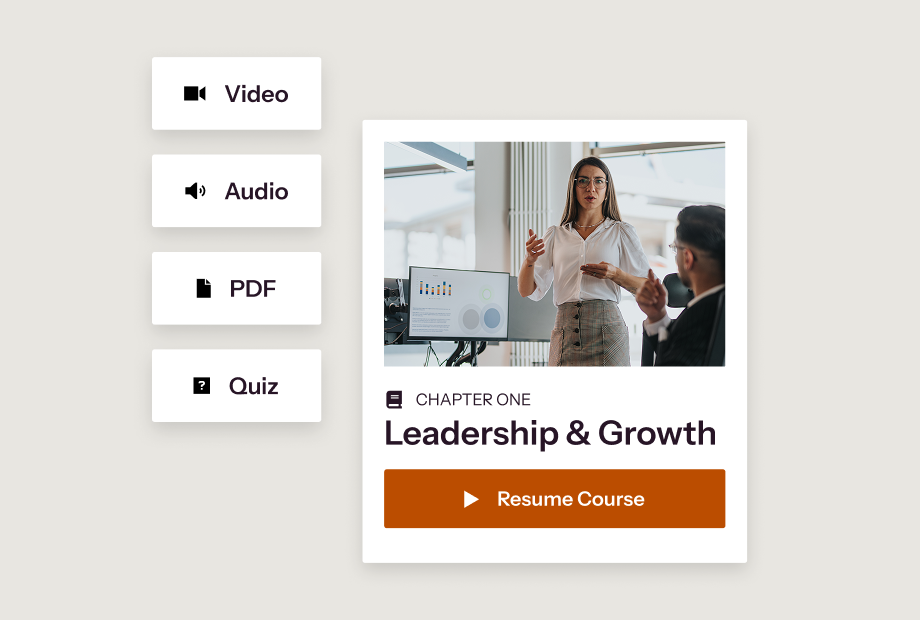
Thinkific’s course builder is designed for growing businesses and enterprises. It’s flexible, intuitive, and AI-supported, making it simple for teams to build and launch engaging courses in multiple formats without technical or design experience. Docebo offers AI-driven course creation tools, however, G2 reviews note that course creation and updates often require specialized system knowledge, which can slow time to launch.
| Course Creation Capabilities | Thinkific | Docebo |
|---|---|---|
| No design or technical experience required | Requires specialized system knowledge | |
| Intuitive course builder | Limited | |
| Unlimited courses, students, and more | No | |
| Create courses with multiple lesson types (video, multimedia, text) | ||
| Downloadable resources, quizzes, and assignments | ||
| SCORM compliant | ||
| AI generated. course outlines, quizzes, and more | ||
| Easy course updates | Configuration-based updates | |
| Course creation complexity (according to G2) | Low | High |
| Launch in weeks, not months | No |
Fit summary
Thinkific Plus is a strong fit for high-growth organizations that prioritize fast time to value and ease of use, with a platform that teams can adopt and manage without heavy implementation or ongoing technical updates. Docebo is a better fit for enterprises with the resources to support a configuration-heavy LMS, including dedicated administrators and longer implementation and update cycles.
“We hit go, we purchased Thinkific Plus, and from there, we spent two weeks ramping our content. We had an incredibly successful rollout. We were utilizing Thinkific Plus within four weeks.”
— Jenn Hunter, Co-Founder, PayShepherd (350+ administrative hours saved in 3 months)
Learning experience
Does Thinkific or Docebo offer a better learning experience?
An engaging learning experience helps learners complete courses and directly affects word-of-mouth growth. engagement, completion rates, and word-of-mouth growth. Learners stay motivated when they can easily navigate through course material, track their progress, and actively participate.
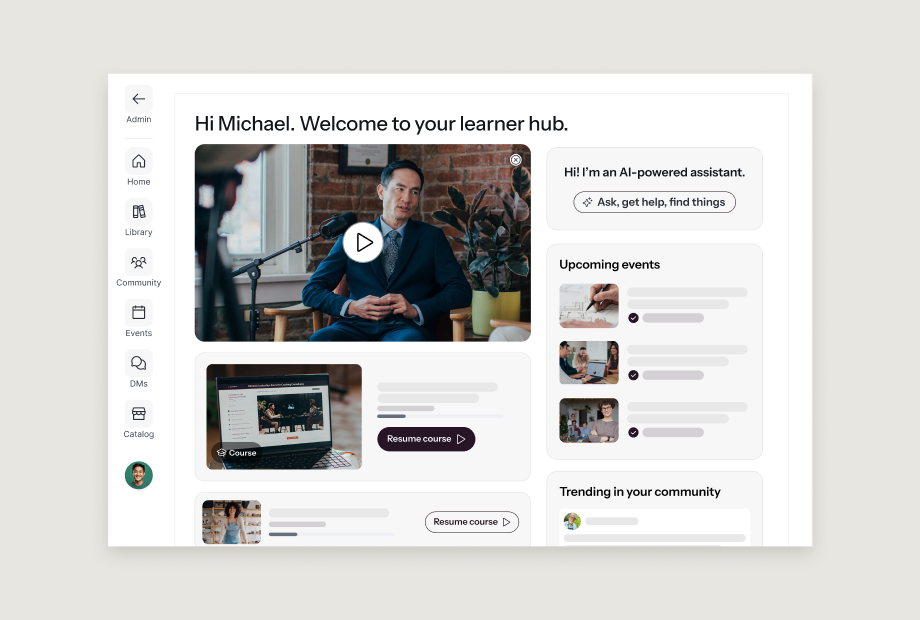
‘Thinkific offers a unified, personalized learner experience that brings courses, communities, live events, and resource libraries into one central place, consistent across desktop, the Thinkific app, and Branded Mobile.’
Docebo supports interactive learning experiences and AI-driven recommendations, however, reviewers report a steeper learning curve and inconsistent layouts can lower usability and add friction for external learners.
Here we’ll compare how Thinkific and Docebo support the learning experience.
| Learning Experience Features | Thinkific | Docebo |
|---|---|---|
| Easy course navigation | ||
| Structured learning paths | ||
| Optimized for all devices | ||
| Multiple payment options | Limited | |
| Live learning | Limited | |
| Unlimited Member-only Communities and spaces | Requires add-on | |
| Ease of use (according to students) | High | Steep learning curve reported |
| AI-powered teaching assistant | ||
| Third-party app integrations for engagement, assessment, learning experience |
Fit summary
While there’s overlap in learning experience features for both Thinkific and Docebo, Thinkific is the stronger choice for companies and enterprise organizations that need ease and consistency in learning experience for all internal and external learners, including customers, employees, and business partners. As Docebo primarily prioritizes internal training, their limited payment options aren’t necessarily a block for learners, but revenue-generating companies and external learners benefit from more payment flexibility available through Thinkific.
“We also attribute the interactive features to the course’s attractive and ultimately viral nature. Users felt it was a premiere purchase they were getting at no cost and wanted to share it with others in the nursing community.”
—Christopher Caulfield, Co-Founder and Chief Nursing Officer, IntelyCare (500,000+ learners trained across 30 countries and 5 languages)
Sales and marketing
What’s the difference between Thinkific and Docebo for selling and marketing courses?
Once you publish your course, it’s time to get it in front of the right audience — that’s where sales and marketing tools come in to help you gain visibility and earn more revenue.
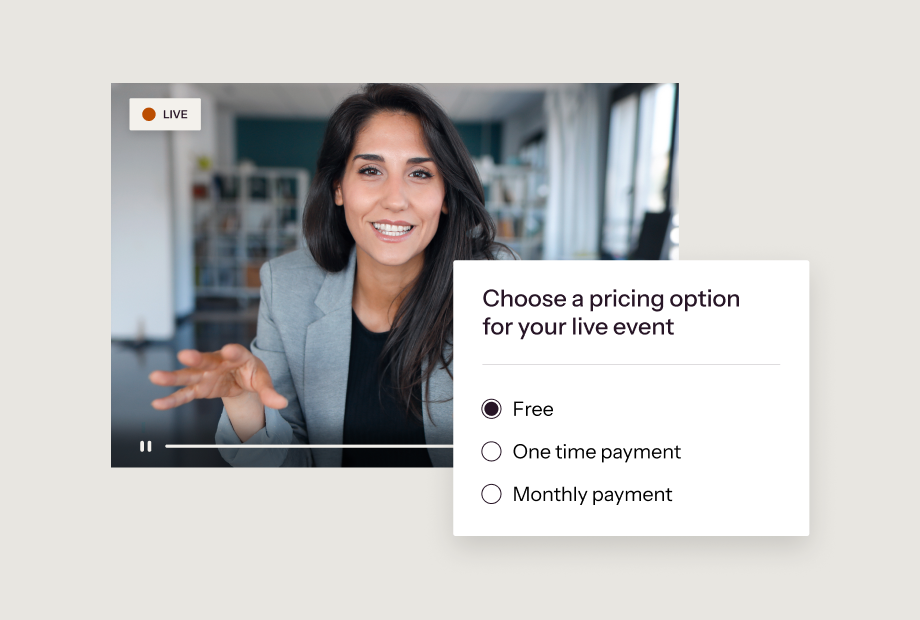
Thinkific’s suite of sales, marketing, and ecommerce tools help organizations market, sell, and scale online learning programs. AI-driven tools help automate time-consuming marketing tasks. Teams can maximize revenue using built-in payments and order bumps, and add over 90 marketing integrations. Unlimited students allow organizations to scale without revenue caps.
Docebo offers AI-powered marketing tools, however, as it isn’t primarily designed as a selling or marketing platform, it’s more limited in terms of integrations and features. Docebo’s pricing model is based on monthly active learners, which works well for fixed audiences, but can limit scalability for organizations selling learning programs to customers or partners.
This section compares how each platform supports revenue generation, marketing, and design customization.
Let’s take a closer look at Thinkific and LearnDash’s sales and marketing tools.
| Sales and marketing features | Thinkific | Docebo |
|---|---|---|
| AI-generated instant sales landing pages | No | |
| AI-powered email marketing campaigns, and copywriting | ||
| Unlimited learners with no revenue caps | No | |
| Subscriptions | ||
| Revenue maximizing | No | |
| Flexible payment plans and order bumps | No | |
| AI-powered social media post generator | No | |
| Pricing model supports audience growth | No | |
| Advanced analytics | ||
| Suite of business tools: payments, bookkeeping, tax remittance, and more | No |
| Design customization features | Thinkific | Docebo |
|---|---|---|
| Visual site and course themes | No | |
| Brand colors, fonts, and styling | ||
| No-code customization | No | |
| White-label learner experience | ||
| Flexible page layouts | Limited | |
| Multiple custom domains |
Fit summary
Thinkific’s powerful sales and marketing capabilities are a strong fit if your business plans to market and sell to customers or partners at scale with built-in commerce features, and require predictable pricing as your audience grows. Docebo works well if your primary goal is to deliver training to a fixed number of learners, or if maximizing revenue isn’t a core need.
“Our previous legacy LMS was more expensive with low user limits, and we were looking to really expand the programs. We were able to scale with Thinkific Plus easily.”
—Anthony Graham, Product Marketing Manager, LANSA (Launched 30 days ahead of deadline and has reached over 5700 learners with 30+ courses)
Mobile app
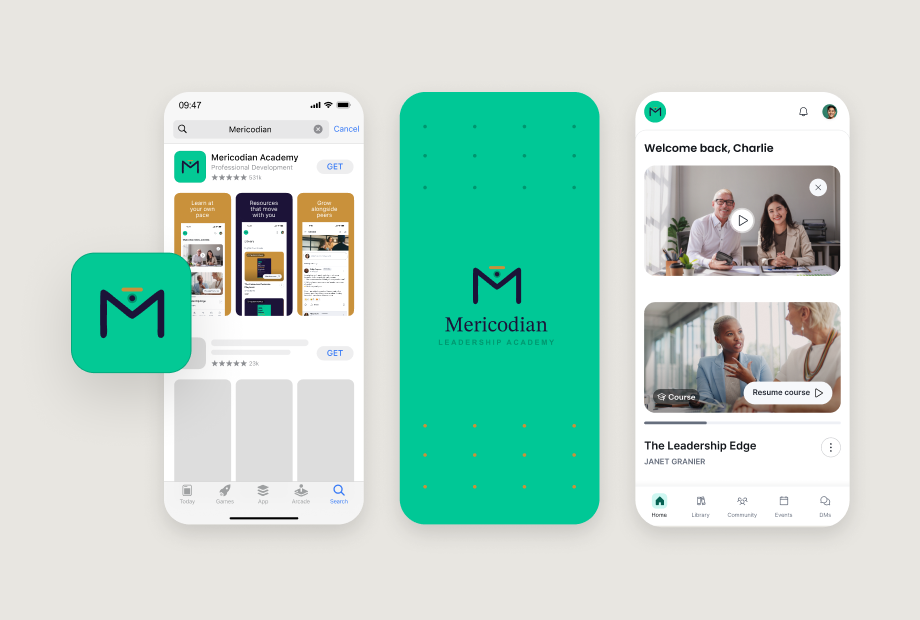
How do Thinkific and Docebo support mobile-first learning?
A branded mobile app provides a seamless learning experience, allowing your audience to engage with your courses from anywhere.
Thinkific Plus offers Branded Mobile, a cost-effective and easy-to-use feature that elevates your brand experience and helps you launch a white-labeled mobile app — no technical expertise required. In-app purchases allow learners to easily buy additional courses without leaving the app.
Docebo’s white-labeled mobile app is designed primarily to support enterprise employee training, but serves as a complement to desktop-based learning, with limited access to communities and in-app purchase capabilities. This feature is built into enterprise plans, making it more financially restrictive.
We’ll look at how Thinkific and Docebo compare in terms of mobile app capabilities.
| Mobile app capabilities | Thinkific | Docebo |
|---|---|---|
| Available on iOS | ||
| Available on Android | ||
| Support for communities | ||
| White-labeled app | ||
| In-app purchases | No | |
| Price | $199/month add-on for Branded Mobile and included at no extra cost for Plus Gold and Plus Platinum plans. | Mobile app capabilities are included with Elevate plans and above, starting at around $30,000/year on a multi-year contract. |
Fit summary
Thinkific is a better option if mobile learning is part of your customer, partner, or revenue-generating education strategy and you want a branded, flexible learner experience across devices. If mobile access is a tertiary channel rather than a core part of your learning experience, Docebo may be a fit.
“About 45% of our users visit horse IQ [our course] through their mobile devices, and it was really easy to set up the Thinkific-branded mobile app.”
—Elizabeth Lawhorn, Director of Competition Development, American Painted Horse Association (486% revenue growth since joining Thinkific, 1000+ students across more than 59 countries)
Support
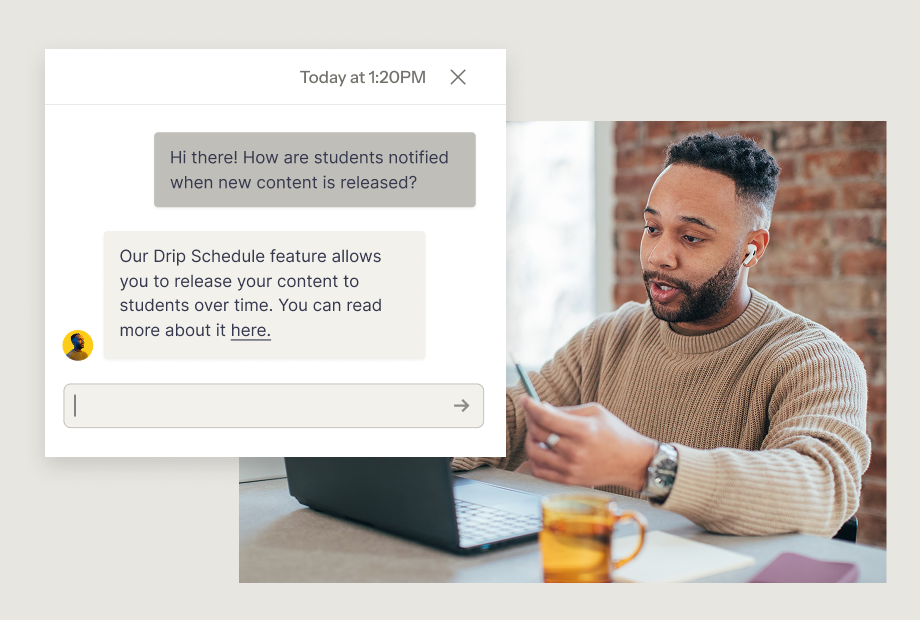
How do Thinkific and Docebo support you as your business grows?
Having access to reliable support is a non-negotiable when choosing the right LMS platform for your organization. As companies scale, teams need quick answers and strategic guidance.
Thinkific is consistently recognized for its G2 award-winning support team. Thinkific Plus customers have access to a dedicated Customer Success Manager to guide them through onboarding, migration, integration setup, and ongoing strategic support to help teams launch and meet their business goals faster and with more confidence.
Docebo offers enterprise-grade support, however, mid-market customers often report longer resolution times and more limited access to hands-on support, with additional setup and support fees.
| Support features | Thinkific | Docebo |
|---|---|---|
| Migration and onboarding | ||
| Dedicated app build | Limited to enterprise tiers | |
| Ongoing technical and strategic support | Limited to enterprise tiers | |
| No setup or support fees | No | |
| Human-led support experience | Limited |
Fit summary
For businesses and enterprises that need hands-on, human-led support, strategic guidance, and onboarding without upfront setup fees, Thinkific is the better fit. Thinkific provides direct access to experts and a dedicated customer support team, making it well-suited for complex setups, scaling programs, and mission-critical learning initiatives.
Docebo’s customer support features are best suited for large multinational companies with fixed learner populations, dedicated platform enablement teams, and the extra budget to invest in support.
“When Epoch Education (119,000+ enrollments, 50+ courses with Thinkific) was planning a course that would welcome over 3500 participants at once, they turned to Pia, from Thinkific’s customer success team, to answer all their technical questions and even had her on standby for the launch, just in case.”
Security
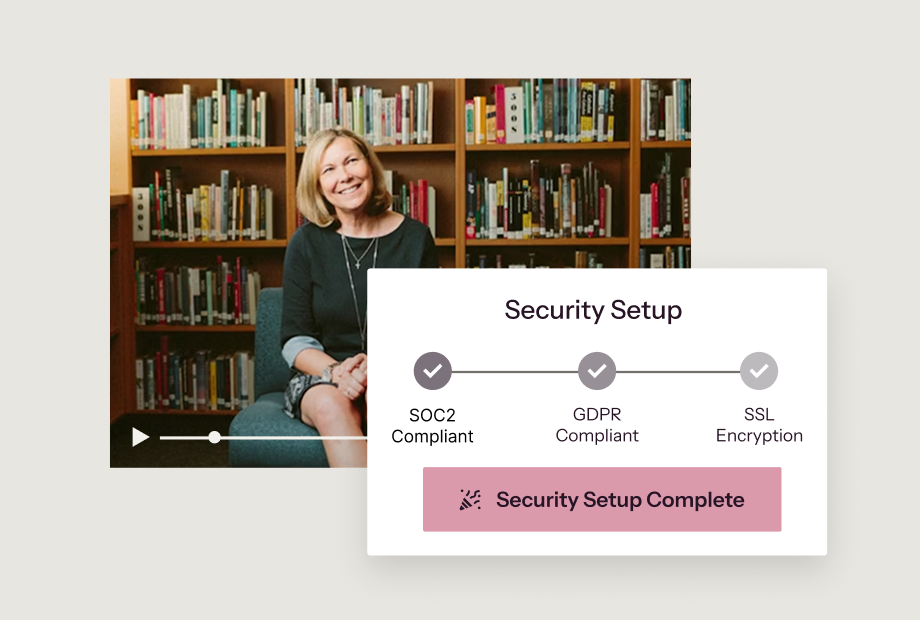
How do Thinkific and Docebo handle security and data protection?
Security features determine how easily organizations can meet internal IT, legal, and compliance requirements. For regulated industries or enterprise buyers, access to audit documentation, identity management, and data protection controls is essential.
Thinkific and Docebo both meet enterprise security standards. Thinkific Plus focuses on practical, audit-ready security for fast-growing organizations with advanced compliance needs. Docebo offers a comprehensive enterprise security and compliance program supported by extensive global certifications.
This section compares how each platform supports security, access control, and compliance requirements.
| Security features | Thinkific | Docebo |
|---|---|---|
| 24/7 monitoring | ||
| SOC 2 Type II compliance | ||
| SCORM-compliant secure content delivery | ||
| Secure payment processing | ||
| Security questionnaires and custom legal agreements | ||
| Single Sign-On (SSO) | ||
| Dedicated sandbox site | Limited admin seats |
Fit summary
Thinkific’s extensive security features emphasize built-in encryption, strict access controls, continuous monitoring, and regular vulnerability testing, offering strong protection for growing education businesses, academies, training companies, and large corporations.
Docebo also offers strong security and privacy compliance, and its extensive ISO certifications work well across highly regulated industries.
Site administration
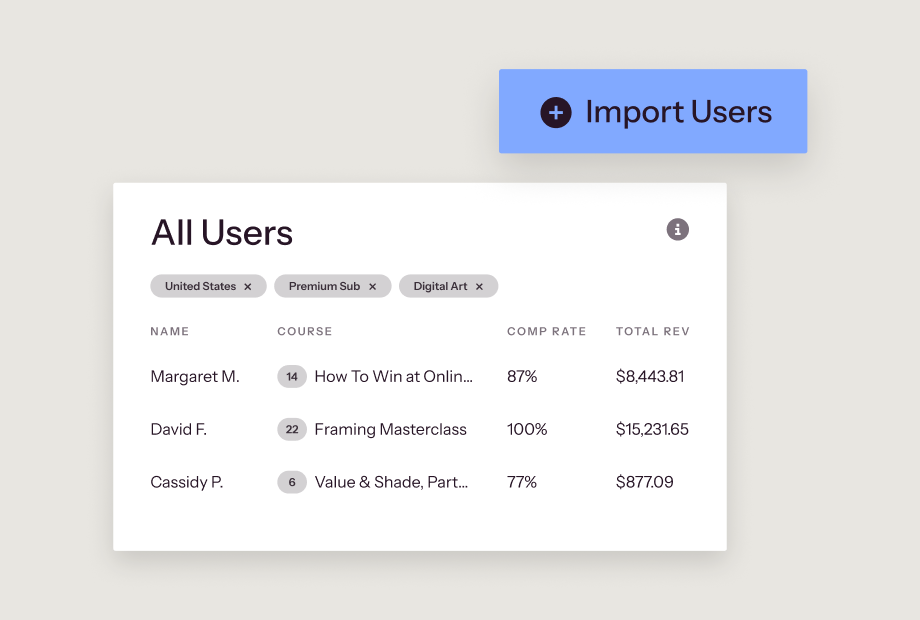
What’s the difference between Thinkific and Docebo for managing learners?
The right site administration features determine how easily teams can manage and scale learners and courses, reducing time consuming manual work.
Thinkific is designed to help business teams — not just technical administrators — manage learners and learning programs day to day with built-in automation with built-in tools that make it easy to update courses and support learners without complex workflows or system reconfiguration.
Docebo also offers administrative controls designed for enterprise companies, however, many management capabilities like updating courses or adjusting learner access often require configuration by a dedicated LMS administrator.
| Site administration features | Thinkific | Docebo |
|---|---|---|
| Built-in course lifecycle management | Limited | |
| Learner enrollment management | ||
| Extensive learner management tools | ||
| Role-based permissions | ||
| Course visibility controls | Limited | |
| Administrative complexity | Low | High |
Fit summary
Thinkific is the better option for teams that need straightforward tools to manage learners, update courses, and control access. If your large enterprise requires highly centralized, IT-managed governance, Docebo may be a fit.
“Thinkific has made it possible to update our content every quarter. It’s nimble and has given us a superpower to create high-quality, fresh content.”
— Darian Kovac, Founder, Jelly Academy (6000+ students, 2 certification courses)
Migration and onboarding
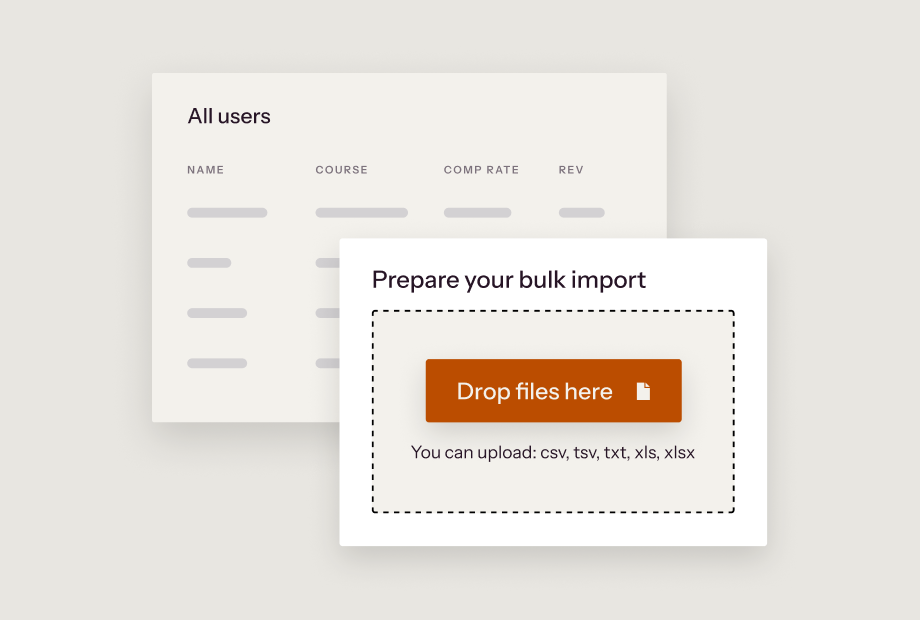
What migration tools and support are available with Thinkific vs. Docebo?
Migrating to a new learning platform can be complex, especially for organizations with large course libraries, historical learner data, or structured training programs. Both Thinkific and Docebo offer migration pathways, but their approaches reflect different levels of technical lift and administrative involvement.
Thinkific focuses on helping teams move quickly with guided onboarding and scalable migration tools. Docebo provides a structured migration framework designed for enterprise implementations, which often involves detailed data preparation, configuration, and coordination with technical stakeholders.
| Migration Tools and Support | Thinkific | Docebo |
|---|---|---|
| Bulk Content Uploader | ||
| Bulk learner import and enrollments | ||
| 1:1 onboarding and launch support | ||
| Manual configuration required after import | No | |
| SCORM content migration support | ||
| Migration complexity for large programs | Moderate | High |
| Dedicated LMS administrator typically required | No |
Fit summary
Thinkific is best for organizations that want a guided migration experience with faster implementation timelines and lower operational complexity, especially when moving revenue-generating or external education programs.
Docebo may be a better fit if your organization requires highly customized enterprise migration workflows and has dedicated teams available to manage extensive data preparation, and post-migration configuration.After switching to Thinkific Plus, Keap — a CRM and marketing automation platform — migrated its learning programs and launched within 48 hours. Philip Michieli, Keap’s Curriculum Developer, explains: “Being able to produce content in a significant number of ways and just Thinkific’s overall ease of use was something that was very pleasant when switching over.”
Frequently asked questions
Which type of organization is best suited for Thinkific Plus vs. Docebo?
Thinkific Plus is designed for academies, growing companies, and enterprises that want to deliver learning experiences to both internal teams and external audiences. Businesses often use it to train customers, partners, and employees while selling learning products from one platform. Docebo is typically used by large organizations focused primarily on internal employee training and corporate learning programs.
Will our team need technical skills to build and update courses?
Thinkific Plus features an intuitive builder that allows teams to create and update courses without needing design or technical expertise. This makes it easier for teams to manage learning content directly on the platform — no dedicated administrator needed. Docebo offers a highly configurable platform, which typically requires additional administrative setup and platform familiarity.
How do the pricing models affect scaling a learning program?
Thinkific Plus offers a predictable pricing structure that supports scaling learning products and audiences over time as you grow. Organizations can create multiple courses and expand their learner base without needing to adjust pricing based on individual learner activity. Docebo typically uses per active user pricing models, which may work well for organizations with a fixed internal workforce.
Can learners access training through a mobile app?
You bet. Both platforms support mobile access on iOS and Android devices. Thinkific Plus offers a branded mobile app experience that allows learners to access courses, communities, and other learning products from their mobile devices. Docebo also provides a mobile app that supports accessing corporate training content on the go.
Do both platforms include tools for selling learning products?
Thinkific Plus includes a powerful suite of built-in commerce tools that help businesses sell learning products such as courses, communities, and digital downloads. These tools support customizable landing pages, checkout experiences, and flexible payment options. Docebo primarily focuses on delivering internal training programs, so organizations that want to sell learning products may require additional paid tools alongside the platform.
What level of support is available during onboarding and beyond?
Thinkific Plus customers work directly with a dedicated Customer Success Manager who helps guide migration, onboarding, platform setup, and supports long-term program growth. This ongoing support helps organizations successfully launch and expand their learning initiatives. Docebo also provides onboarding and support resources for enterprise customers.
How do these platforms address enterprise security and compliance requirements?
Both Thinkific Plus and Docebo provide enterprise-level security features designed to protect customer data and platform activity. These protections can include secure infrastructure, monitoring, and compliance frameworks that support organizations operating at scale.
Can these platforms connect with our existing business tools?
Thinkific Plus integrates with a wide range of marketing, analytics, and CRM tools, and also supports workflow automation through integrations like Zapier. This makes it easier for businesses to connect their learning platform with their existing tech stack. Docebo also provides integrations with enterprise systems, particularly those used for HR and workforce management.
Our customers have earned $4.23 billion with Thinkific
Talk to one of our team members to discover how Thinkific’s award-winning platform can help you drive revenue and retention.