
Training your team used to mean booking a room and hoping people showed up. Now it means keeping a distributed workforce skilled, aligned, and engaged, all at once.
88% of organizations say employee retention is a top concern. The ones winning that battle have figured out something important: learning can’t be a once-a-year initiative. It has to be built into how teams operate.
A corporate LMS is what makes that possible at scale. But the wrong one costs you more than budget. It costs you time, adoption, and the trust of the people you’re trying to support.
This guide is here to help you find the right fit.
Skip ahead:
- Summary of top LMS platforms for corporate training
- Why Use a Corporate Learning Management System for Training Employees?
- Features To Look For in the Best Corporate Learning Management Systems
- Top 5 Corporate LMS Platforms in 2026: Compared
- The Bottom Line on Choosing a Corporate LMS
Summary of top LMS platforms for corporate training
| Platform | Best for |
| Thinkific Plus G2 score: 4.5 out of 5 | B2B training, customer education, and extended enterprise programs that need scalable delivery, AI-assisted learning, and advanced analytics |
| Docebo G2 score: 4.2 out of 5 | Large enterprises focused on AI-driven internal L&D, skills development, and workforce enablement |
| Cornerstone OnDemand G2 score: 4.1 out of 5 | Skills-based enterprise learning tied to talent development, reskilling, and workforce planning |
| Absorb LMS G2 score: 4.3 out of 5 | Internal employee training and compliance programs in regulated or structured environments |
| TalentLMS G2 score: 4.6 out of 5 | Simple, mid-market training programs prioritizing ease of use and quick setup over advanced analytics |
Try using this LMS feature comparison evaluation checklist to help compare Learning Management Systems you’re interested in:
Why Use a Corporate Learning Management System for Training Employees?
With a corporate learning management system (LMS), organizations can reduce training costs while still delivering high-quality employee education programs at scale. Modern LMS platforms also help L&D teams make better, faster decisions by improving visibility into learner performance, engagement, and outcomes—driving greater efficiency across training operations.
The following are just some of the many benefits of implementing an LMS for corporate training:
- Better learning outcomes
Learning management systems use structured learning paths, interactive content, and engagement mechanisms—such as gamification, incentives, and progress tracking—to keep learners motivated and focused. These experiences help reduce drop-off, reinforce key concepts, and increase course completion rates.
More advanced LMS platforms now support personalized learning experiences that adapt based on learner behavior, role, or performance. By guiding employees toward the most relevant content and resources, organizations can improve knowledge retention and accelerate skill development across teams.
- Thorough learner evaluation
An LMS gives L&D teams clear insight into how employees progress through training programs. You can track course completion, time spent learning, assessment performance, and knowledge retention across individuals, teams, and cohorts.
Quizzes, tests, and assessments make it easier to identify gaps in understanding, measure readiness, and continuously refine training materials. In modern platforms, analytics can also surface trends over time—helping teams spot disengagement early and adjust programs before performance issues escalate.
- Increased Accessibility
A mobile-friendly LMS makes training accessible anytime, anywhere—whether employees are working remotely, in the field, or across multiple time zones. Giving learners the flexibility to train on their own schedule consistently leads to higher participation and completion rates.
Cloud-based platforms also ensure that training content, updates, and policy changes are delivered instantly so employees always have access to the most current training information. This is especially important for organizations managing compliance, certifications, or frequently changing learning content.
- Reduced training costs
An LMS helps lower training costs by automating time-consuming administrative tasks such as learner enrollment, reminders, progress tracking, and reporting. By centralizing training delivery and management in one system, organizations reduce reliance on manual processes, printed materials, and disconnected tools.
As training programs scale, these efficiencies become increasingly important, allowing L&D teams to support more learners without significantly increasing operational overhead.
- Increased program effectiveness
With built-in reporting and analytics, LMS platforms make it easier to understand what’s working and where training programs need improvement. L&D teams can identify underperforming courses, compare results across groups, and measure the impact of training initiatives over time.
More advanced analytics capabilities can also help organizations anticipate training needs, identify at-risk learners, and continuously optimize programs. This can lead to higher engagement, stronger outcomes, and better alignment between learning initiatives and business goals.
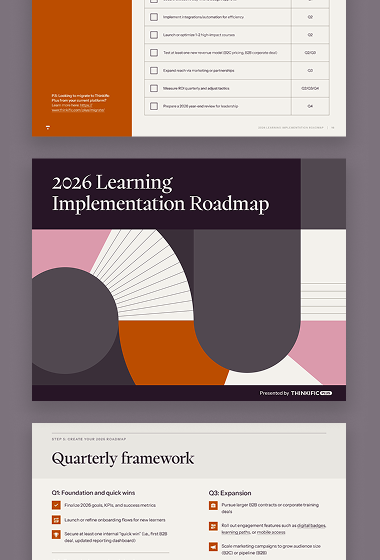
Get the 2026 Learning Implementation Roadmap
A practical guide and template to help you plan for the year and set your employee training program up for success.
Features To Look For in the Best Corporate Learning Management Systems
When selecting an LMS for your training business, it’s important to choose an enterprise-level platform designed specifically for B2B corporate training. Beyond basic content delivery, modern LMS platforms should help L&D teams create, manage, and continuously improve training programs—while scaling efficiently across teams, departments, and audiences.
A strong corporate LMS should make it easy to build engaging courses and assessments, track learner performance, and monitor progress within a single, integrated system. As training needs grow more complex, the right platform will also support smarter decision-making through automation, analytics, and AI-driven capabilities.
Look for a corporate LMS with the following features:
Easy course creation and content management
Your LMS should provide intuitive, drag-and-drop tools that make it easy to create, update, and manage courses without relying on technical teams or external vendors. This flexibility is critical for scaling training programs quickly—whether you’re onboarding new employees, rolling out compliance updates, or launching new skill development initiatives.
Modern platforms increasingly support AI-assisted content creation, helping teams generate course outlines, assessments, summaries, or structured learning materials faster. These tools reduce time-to-launch, lower content development costs, and make it easier to keep training content aligned with evolving business needs.
AI-assisted learning and learner support
In 2026, leading LMS platforms go beyond static content by supporting learners directly within the learning experience. AI-assisted learning tools can help answer learner questions, guide users to relevant content, and provide contextual support as employees move through training programs.
By offloading repetitive questions and offering personalized guidance at scale, AI-driven learner support helps improve engagement and completion rates while reducing the administrative burden on instructors and L&D teams.
Automated assessments and advanced analytics
Automated assessments remove the need for manual grading and spreadsheet-based tracking. A modern LMS should automatically capture assessment results, learner progress, and engagement data across courses and programs.
Beyond basic reporting, advanced analytics help L&D teams turn data into insight. Look for platforms that make it easy to analyze performance trends, compare cohorts, and understand how learners are interacting with training content over time. These insights are essential for refining programs, improving outcomes, and demonstrating the value of training initiatives.
Predictive insights for proactive L&D decisions
As LMS analytics mature, organizations increasingly expect platforms to surface early warning signals, not just historical data. Predictive learning insights help identify learners who may be disengaged, falling behind, or at risk of not completing training requirements.
By highlighting patterns such as stalled progress or declining engagement, predictive analytics allow L&D teams to intervene earlier, adjust learning paths, or provide additional support before issues impact performance, compliance, or retention.
Community and collaboration
Effective corporate learning is rarely a one-way experience. Many LMS platforms now include built-in community and collaboration features such as discussion spaces, live sessions, peer interaction, and virtual classrooms.
These social learning environments encourage knowledge sharing, peer support, and deeper engagement. Collaborative learning consistently leads to higher participation, stronger retention, and more meaningful learning outcomes—especially in remote or distributed teams.
Scalability for growing teams and programs
A corporate LMS should scale seamlessly as training programs expand. This includes supporting multiple teams, departments, cohorts, or client groups without adding unnecessary administrative complexity.
Scalable platforms automate key workflows such as enrollment, reminders, progress tracking, and reporting, allowing L&D teams to support more learners without proportionally increasing overhead. This flexibility is especially important for organizations managing internal training alongside partner, customer, or extended enterprise programs.
Integration and data flexibility
As training becomes more closely tied to business performance, LMS platforms must integrate smoothly with the rest of the enterprise tech stack. Look for systems that support integrations with HR platforms, CRM tools, identity providers, content libraries, and analytics or business intelligence tools.
Strong integration capabilities—whether through native connectors or APIs—help eliminate data silos, streamline reporting, and ensure learning data can be used to inform broader workforce and business decisions.
Top 5 Corporate LMS Platforms in 2026: Compared
Technology is crucial in delivering learning experiences that yield high employee engagement and performance. The right LMS can make or break your training program. But with so many options out there, how do you choose? This guide will help you select the best LMS for your training goals.
- Thinkific Plus — Best for B2B training and extended enterprise
Thinkific Plus is a modern corporate LMS designed for organizations that deliver training as part of their business model—whether that’s employee enablement, partner education, customer training, or revenue-generating academies. Unlike traditional HR-centric LMS platforms, Thinkific Plus focuses on delivering high-quality learning experiences at scale while giving teams the tools they need to manage, optimize, and grow their programs.
One of Thinkific Plus’s key strengths is its flexibility across audiences. Organizations can support internal teams, external partners, customers, or multiple client groups within a single platform without fragmenting their learning infrastructure or relying on separate tools.
Key strengths of Thinkific Plus
- AI-assisted content creation and learner support. Thinkific Plus supports AI-driven workflows that help teams create, structure, and maintain training content more efficiently. AI tools can assist with outlining courses, generating assessments, and supporting learners directly within the learning experience, reducing instructor workload while improving engagement and completion rates.
- Advanced analytics tied to real outcomes. Built-in analytics provide visibility into learner engagement, completion rates, performance trends, and program effectiveness. These insights help L&D teams identify what’s working, spot disengagement early, and continuously refine training programs. For organizations delivering external or extended enterprise training, analytics also help connect learning performance to broader business goals.
- Scalable delivery for multi-audience training. Thinkific Plus is well suited for organizations that need to scale training across departments, partners, customers, or regions. Automation features simplify enrollment, progress tracking, and reporting, allowing teams to support growing audiences without adding operational complexity.
- Integration and API flexibility. The platform supports integrations with key business systems and provides API access for organizations that need custom workflows or deeper data connectivity. This makes it easier to embed learning into existing ecosystems and avoid the data silos common with legacy LMS platforms.
Potential considerations:
Organizations looking for a deeply HR-embedded LMS focused primarily on performance management or talent reviews may require additional integrations. Thinkific Plus is best suited for teams that prioritize learning experience, scalability, and measurable impact across internal and external audiences.
Thinkific Plus Reviews
G2 Score: 4.5 out of 5
Conclusion
Thinkific Plus stands out for its ease of use, flexibility, and ability to support scalable B2B and extended enterprise training programs. For organizations focused on delivering impactful learning experiences—without the complexity often associated with enterprise LMS platforms—it offers a strong balance of power, usability, and growth readiness.
- Docebo — Best for AI-driven enterprise L&D
Docebo is an enterprise-grade learning management system designed primarily for large organizations running internal employee training at scale. It is best known for its strong focus on AI-powered automation, skills intelligence, and data-driven learning operations across complex enterprise environments.
Unlike platforms built for external or revenue-generating training, Docebo is optimized for centralized, internal L&D teams managing large learner populations, multiple business units, and global training initiatives.
Key strengths of Docebo
- AI-driven automation and skills intelligence. Docebo places AI at the core of its platform, using machine learning to support content recommendations, skill mapping, learner segmentation, and administrative automation. These capabilities are designed to help enterprise L&D teams personalize learning paths and manage large-scale programs more efficiently.
- Advanced enterprise analytics. The platform offers robust reporting and analytics tools that support performance tracking, cohort analysis, and skills-based insights. These analytics are particularly valuable for organizations focused on workforce development, internal mobility, and long-term capability building.
- Built for large, complex organizations. Docebo is well suited for enterprises with multiple departments, regions, and roles. Its architecture supports large user volumes, complex hierarchies, and structured governance requirements common in global organizations.
Docebo Reviews
G2 Score: 4.4 out of 5
Potential considerations
Docebo’s depth and flexibility come with added complexity. Implementation, configuration, and ongoing management may require dedicated L&D resources or external support. Organizations focused on external training, partner education, or customer-facing learning programs may find the platform less intuitive for those use cases compared to LMSs designed for extended enterprise delivery.
Conclusion
Docebo is a strong choice for large enterprises prioritizing AI-driven internal learning, skills development, and structured workforce enablement. It is best suited for organizations with mature L&D teams that can fully leverage its advanced automation and analytics capabilities.
- Cornerstone OnDemand — Best for skills-based enterprise learning

Cornerstone OnDemand is a long-established enterprise learning platform built for organizations that view learning as a core part of talent development, workforce planning, and long-term skills strategy. It is most commonly used by large enterprises that want to connect training programs with broader initiatives around performance, mobility, and capability building.
Unlike platforms designed primarily for external or revenue-driven training, Cornerstone is deeply embedded in internal enterprise L&D and HR ecosystems.
Key strengths of Cornerstone OnDemand
- Skills-based learning and workforce development. Cornerstone places a strong emphasis on skills intelligence, enabling organizations to align learning programs with role requirements, competency frameworks, and long-term workforce planning. This makes it well suited for enterprises focused on reskilling, upskilling, and internal mobility.
- Enterprise-grade analytics and reporting. The platform offers robust analytics for tracking learner progress, program effectiveness, and skills development across large populations. These insights support strategic L&D planning and help organizations understand how learning initiatives contribute to workforce readiness.
- Tight integration with HR and talent systems. Cornerstone is designed to operate alongside performance management, HRIS, and talent management tools. This integration makes it easier to connect learning data with employee profiles, career paths, and organizational planning.
Potential considerations
Cornerstone’s enterprise focus can introduce complexity, particularly for organizations that need to launch training programs quickly or support external audiences such as partners or customers. Smaller teams or training businesses may find the platform more heavyweight than necessary for their needs.
Cornerstone OnDemand reviews
G2 score: 4.1 out of 5
Conclusion
Cornerstone OnDemand is a strong fit for large enterprises that prioritize skills-based learning, internal workforce development, and deep integration with HR and talent systems. It is best suited for organizations with mature L&D and HR functions that require structured, enterprise-scale learning infrastructure.
- Absorb LMS — Best for internal training and compliance
Absorb LMS is an enterprise learning platform built for organizations that prioritize internal employee training, compliance, and structured workforce enablement. It’s commonly used by mid-sized to large organizations that need reliable delivery of mandatory training alongside ongoing professional development.
Absorb focuses on providing a stable, well-rounded LMS experience for internal audiences, with an emphasis on usability, governance, and reporting.
Key strengths of Absorb LMS
- Strong compliance and certification management. Absorb LMS is well suited for organizations operating in regulated environments. It supports compliance tracking, certifications, and audit-ready reporting, making it easier to manage mandatory training requirements across teams and departments.
- Robust reporting and administrative controls. The platform offers comprehensive reporting tools for tracking completions, assessments, and learner progress. Administrative controls allow L&D teams to manage roles, permissions, and training structures consistently across large employee populations.
- Enterprise-ready scalability. Absorb is designed to support growing organizations with distributed teams. Its infrastructure accommodates large user volumes and structured training programs without sacrificing performance or reliability.
Potential considerations
While Absorb LMS is a strong choice for internal training, it is less flexible for organizations delivering external, partner, or customer-facing education programs. Advanced AI-driven learner support and predictive analytics capabilities are more limited compared to platforms that are specifically optimized for modern, extended enterprise learning use cases.
Absorb LMS reviews
G2 score: 4.6 out of 5
Conclusion
Absorb LMS is a solid option for organizations that need a dependable platform for internal training and compliance management. It is best suited for teams that value structured governance, reporting consistency, and regulatory readiness over advanced AI-driven learning experiences or external training flexibility.
- TalentLMS — Best for simple, mid-market training programs
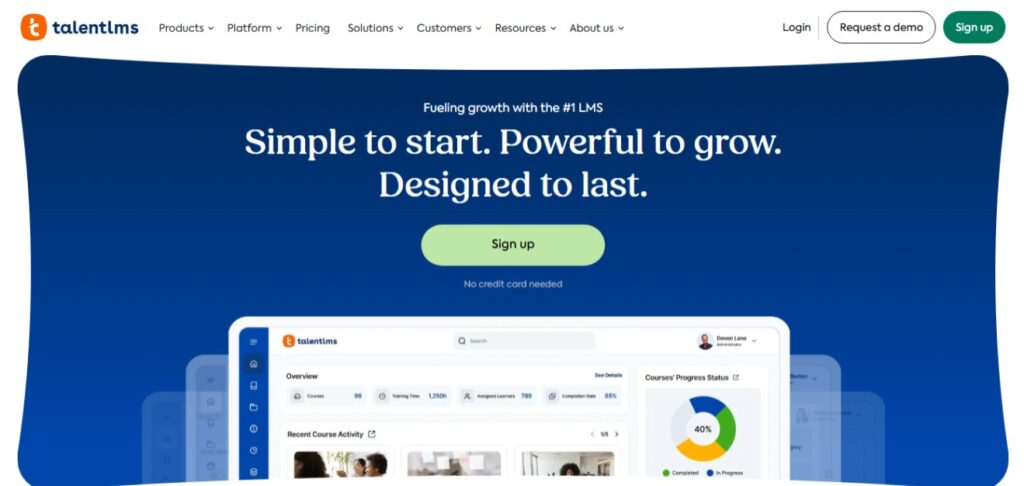
TalentLMS is a cloud-based learning management system designed for small to mid-sized organizations that want to launch employee training programs quickly without significant setup or technical complexity. It’s often chosen by teams that prioritize ease of use and fast implementation over advanced customization or enterprise-grade analytics.
The platform is well suited for organizations with straightforward training needs and limited administrative resources.
Key strengths of TalentLMS
- Ease of use and fast setup. TalentLMS is known for its intuitive interface and minimal learning curve. Teams can create courses, enroll learners, and begin delivering training with relatively little configuration, making it a practical choice for organizations that need to move quickly.
- Core training features without overhead. The platform covers essential LMS functionality such as course creation, assessments, progress tracking, and basic reporting. For many mid-market teams, these features are sufficient to manage onboarding, compliance, or skills training programs.
- Affordable entry point. TalentLMS offers pricing and plans that are accessible for smaller organizations or teams just beginning to formalize their training efforts, helping reduce barriers to adoption.
Potential considerations
TalentLMS is intentionally lightweight. Advanced analytics, predictive insights, and AI-driven learner support are limited compared to more modern or enterprise-focused platforms. Organizations planning to scale complex training programs, support multiple external audiences, or rely heavily on data-driven optimization may eventually outgrow the platform. If that sounds like your roadmap, our Thinkific vs. TalentLMS comparison breaks down pricing at scale, analytics, and support for external training.
TalentLMS reviews
G2 score: 4.6 out of 5
Summary
TalentLMS is a good fit for small to mid-sized organizations that need a simple, affordable LMS to support basic training programs. It’s best suited for teams that value speed and usability over advanced analytics, AI capabilities, or large-scale training complexity.
The Bottom Line on Choosing a Corporate LMS
Choosing the right corporate learning management system is a strategic decision that impacts not only training costs, but also employee performance, engagement, and long-term growth. As corporate training continues to evolve, organizations should look beyond basic content delivery and focus on platforms that support smarter, more scalable learning programs.
When evaluating an LMS, factors like ease of use, security, scalability, and pricing still matter—but they’re no longer enough on their own. Modern LMS platforms should also support AI-assisted content creation, personalized learning experiences, and advanced analytics that help L&D teams understand what’s working, identify gaps early, and continuously improve training outcomes.
The right LMS makes it easier to create and update training materials quickly, support collaboration and knowledge sharing, and deliver consistent learning experiences across devices and locations. Just as importantly, it provides the data and insight needed to make informed decisions—whether that’s refining course content, supporting at-risk learners, or aligning training initiatives with broader business goals.
By choosing a corporate LMS built for today’s training demands, organizations can move beyond reactive learning programs and create more adaptive, effective, and future-ready training experiences.
Get the 2026 Learning Implementation Roadmap
A practical guide and template to help you plan for the year and set your employee training program up for success.